Extended briefing
AI and Trust
What policymakers need to know.
Forty-two slides, in seven parts, from social capital and power to a session agenda you can use.
Part I/The stakes
01
AI and Trust: What Policymakers Need to Know
02
Why This Matters Now
03
The Problem in One Sentence
Part II/Trust under strain
04
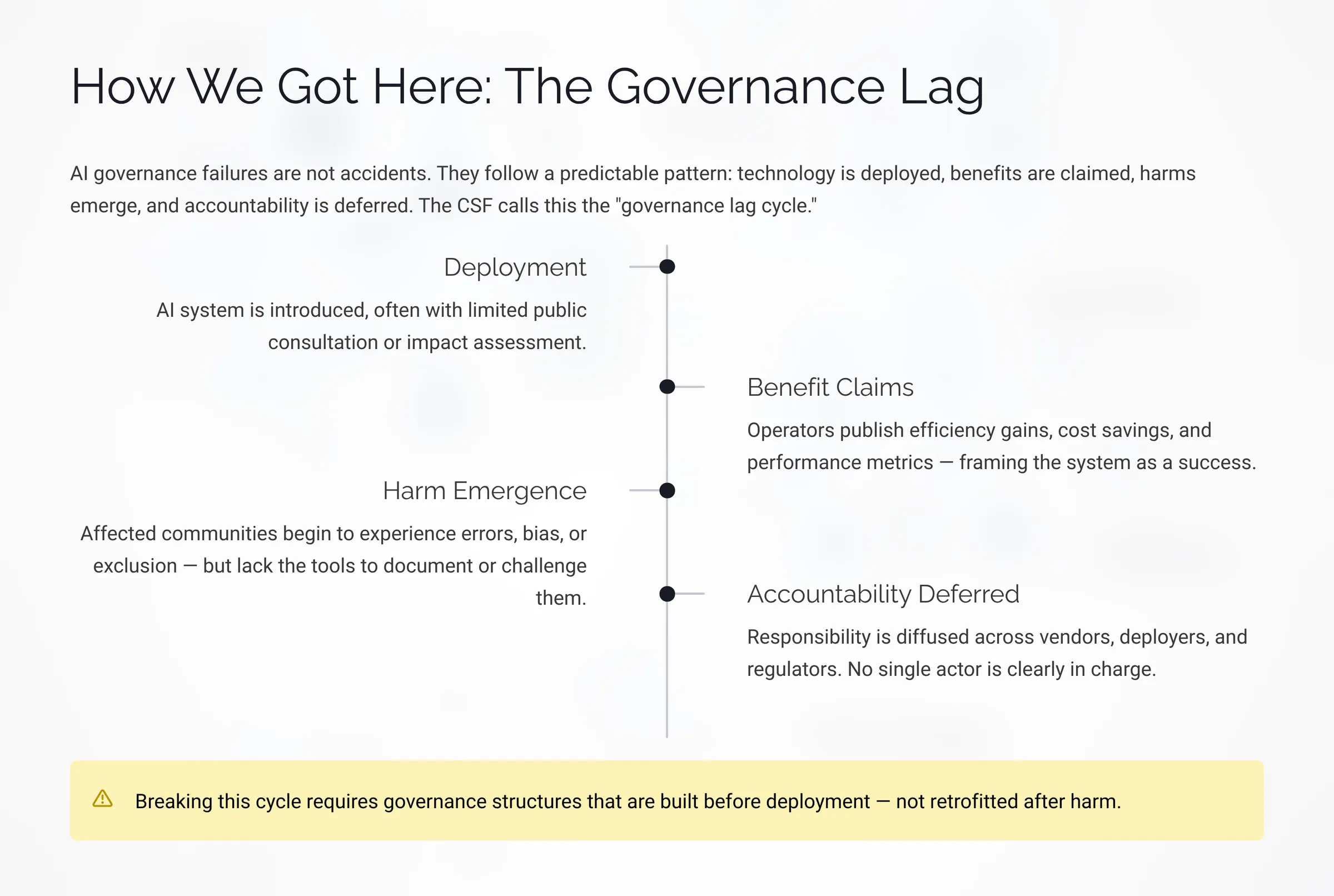
How We Got Here: The Governance Lag
05
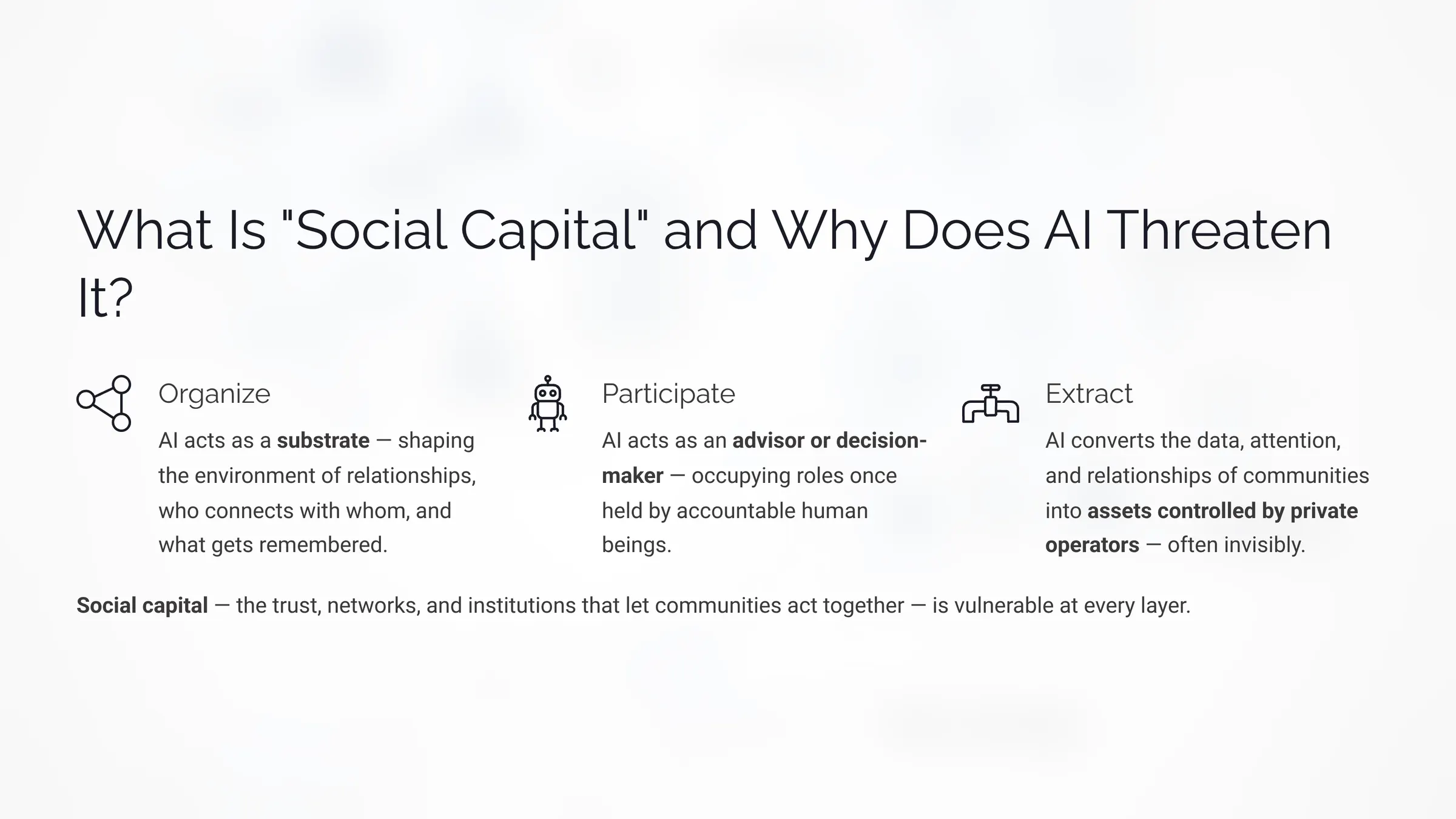
What Is Social Capital, and Why Does AI Threaten It?
06
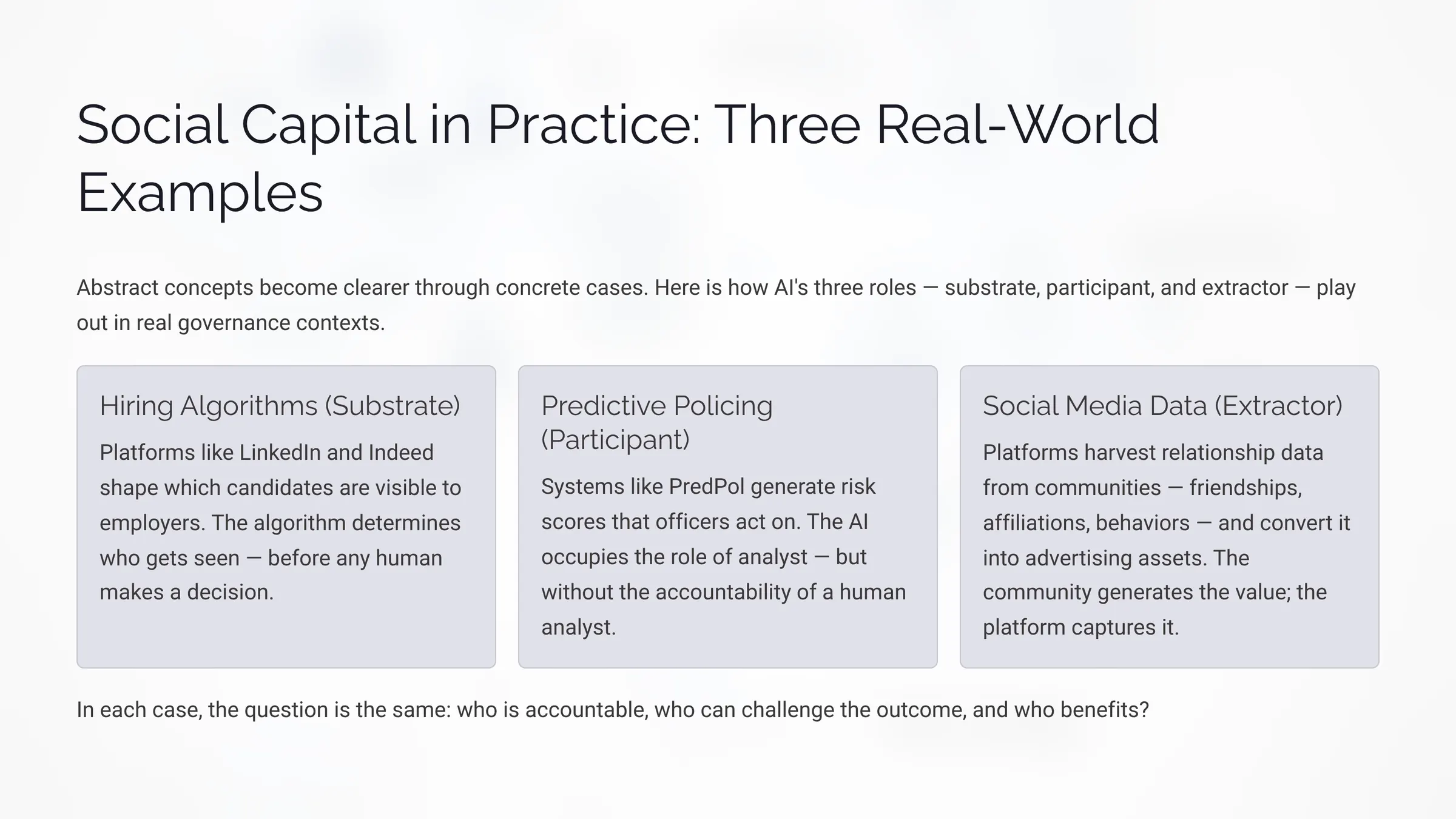
Social Capital in Practice: Three Real-World Examples
07
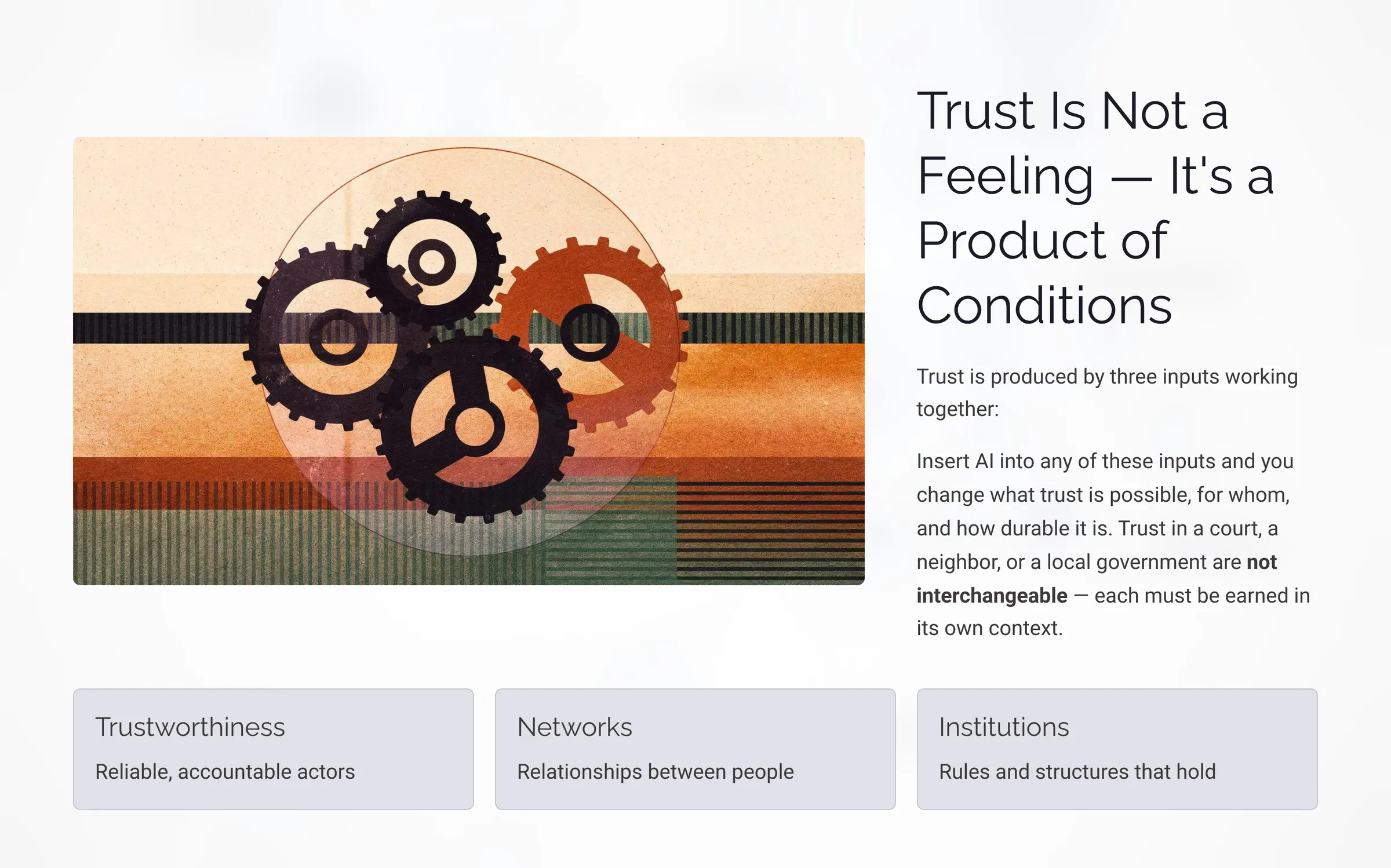
Trust Is Not a Feeling. It's a Product of Conditions
08
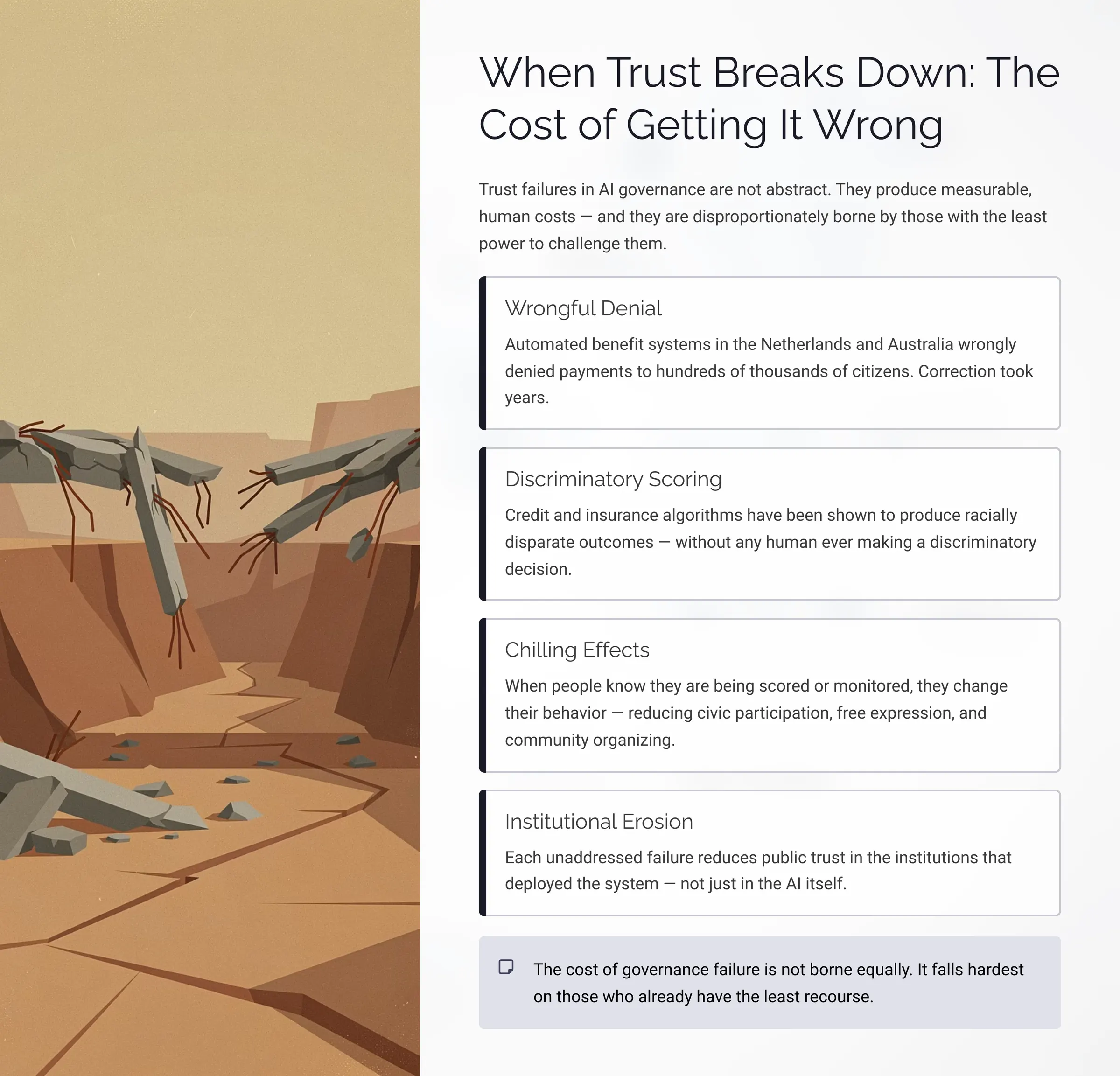
When Trust Breaks Down: The Cost of Getting It Wrong
09
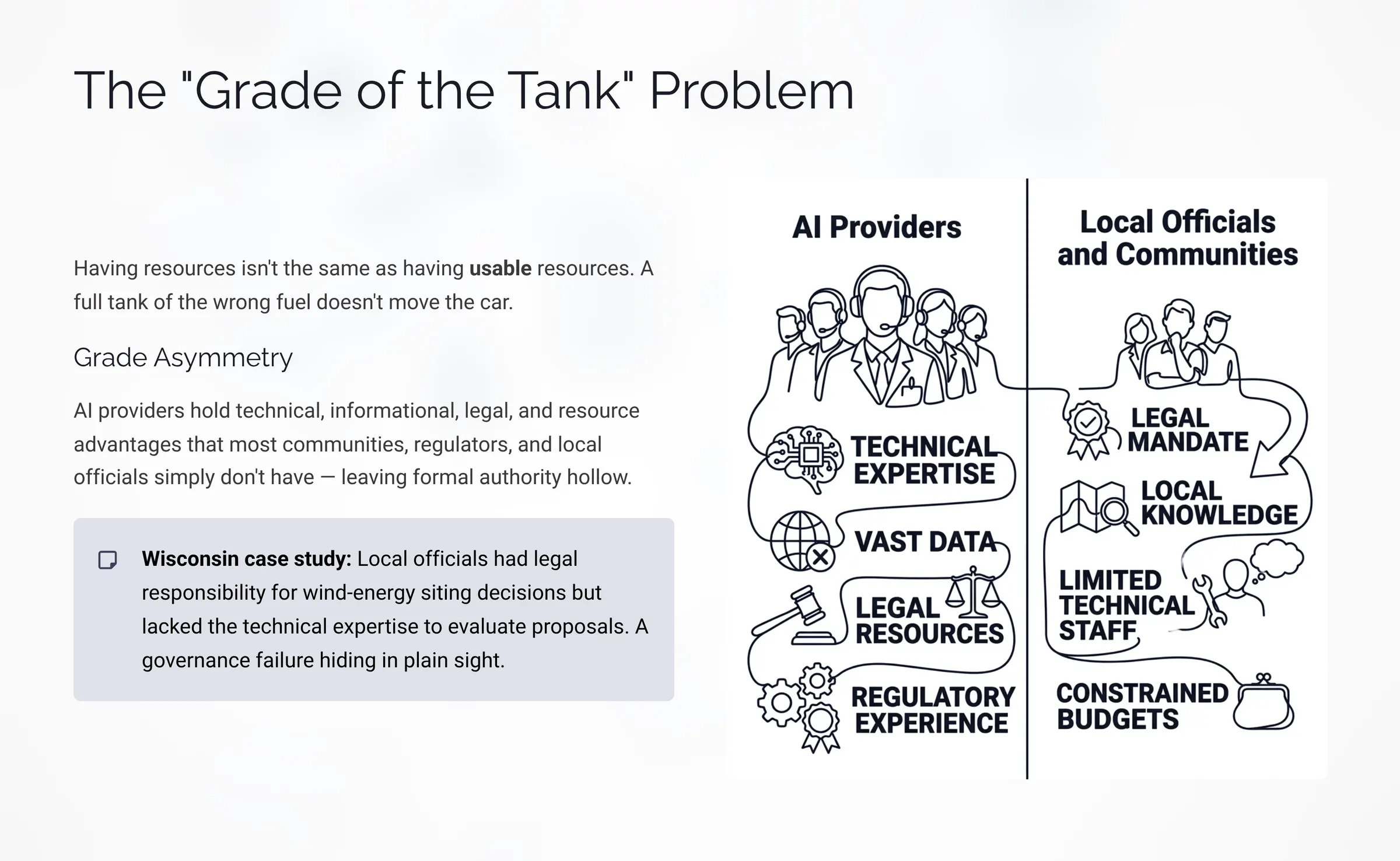
The Grade-of-the-Tank Problem
10
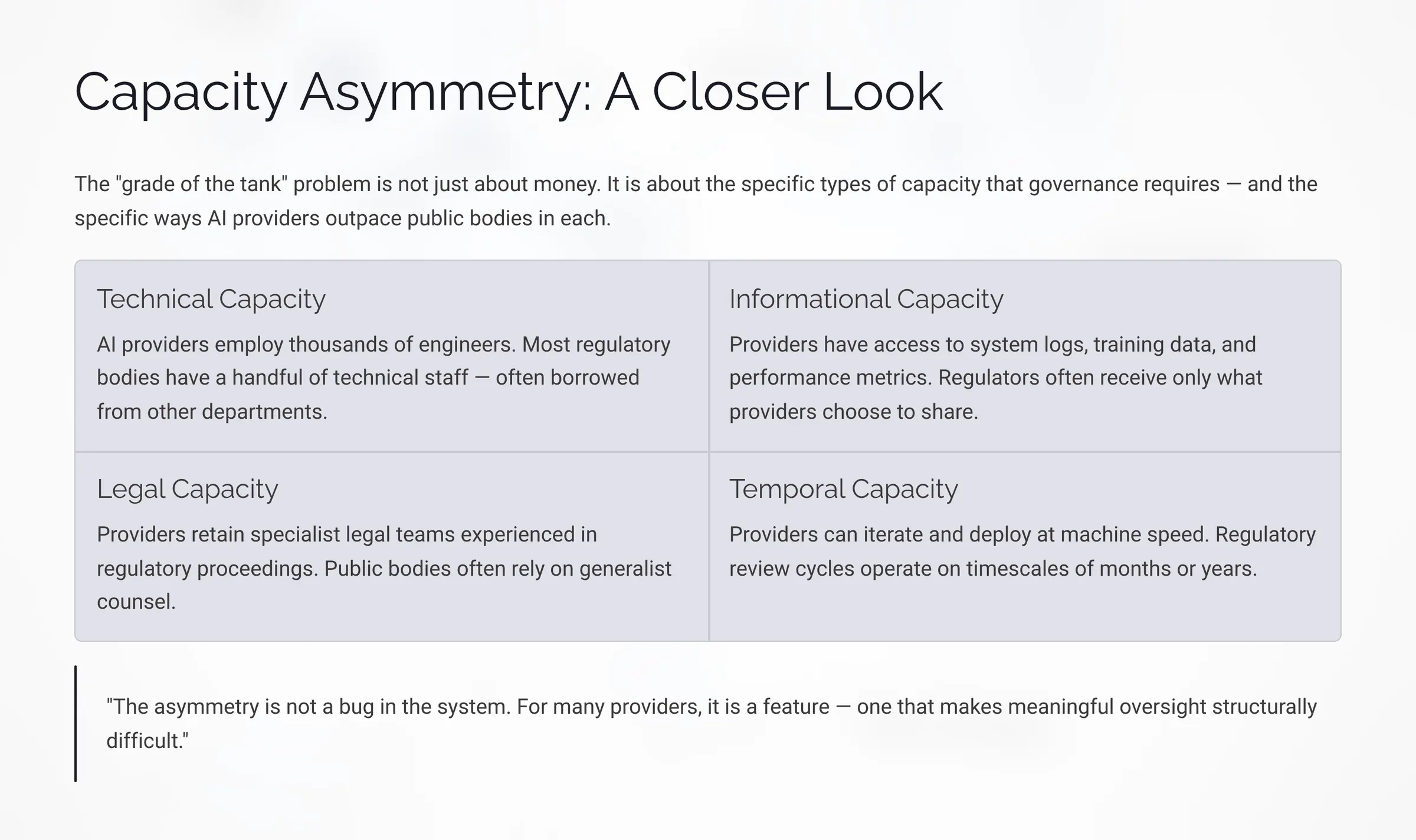
Capacity Asymmetry: A Closer Look
Part III/Power and extraction
11
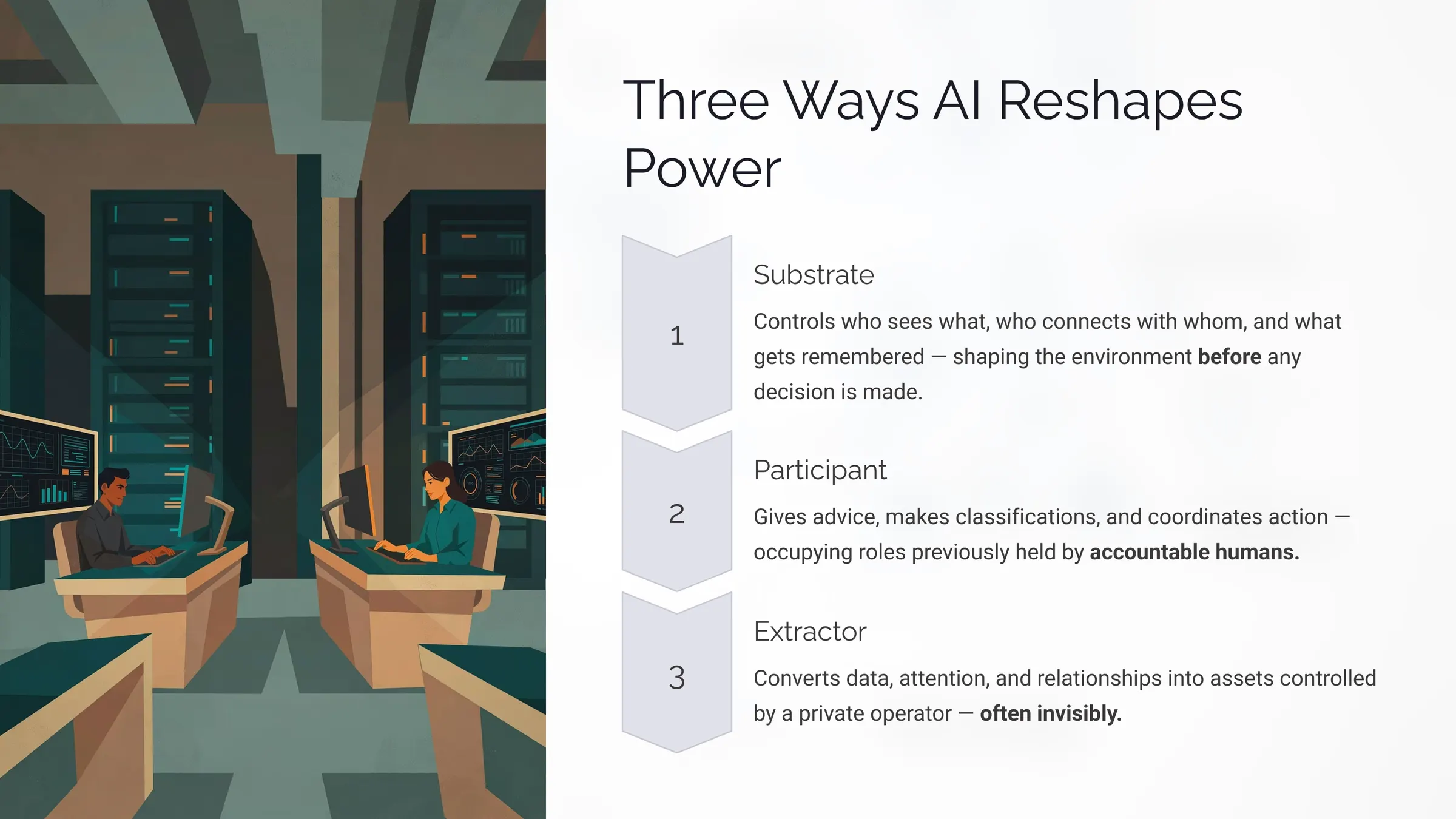
Three Ways AI Reshapes Power
12
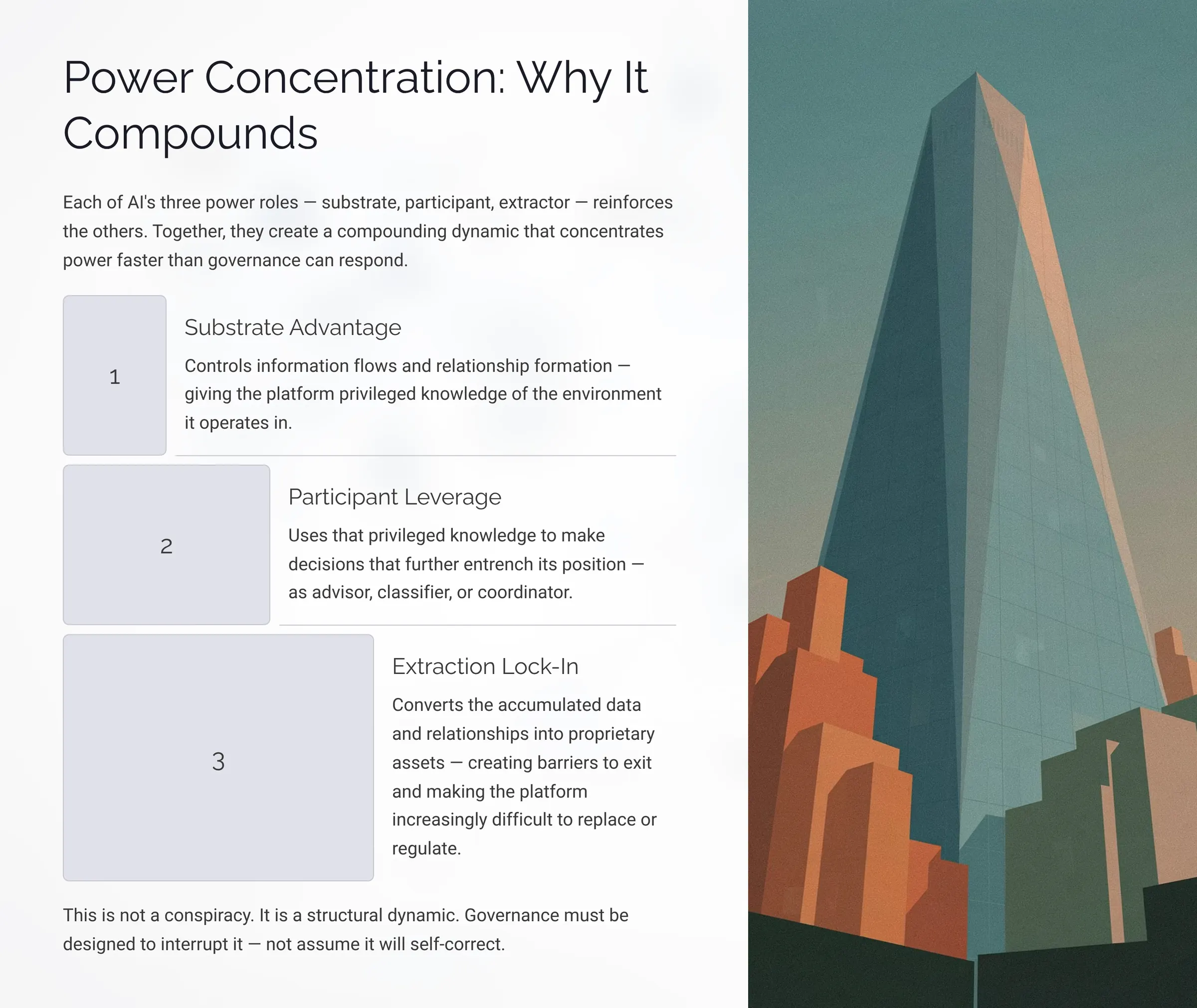
Power Concentration: Why It Compounds
13
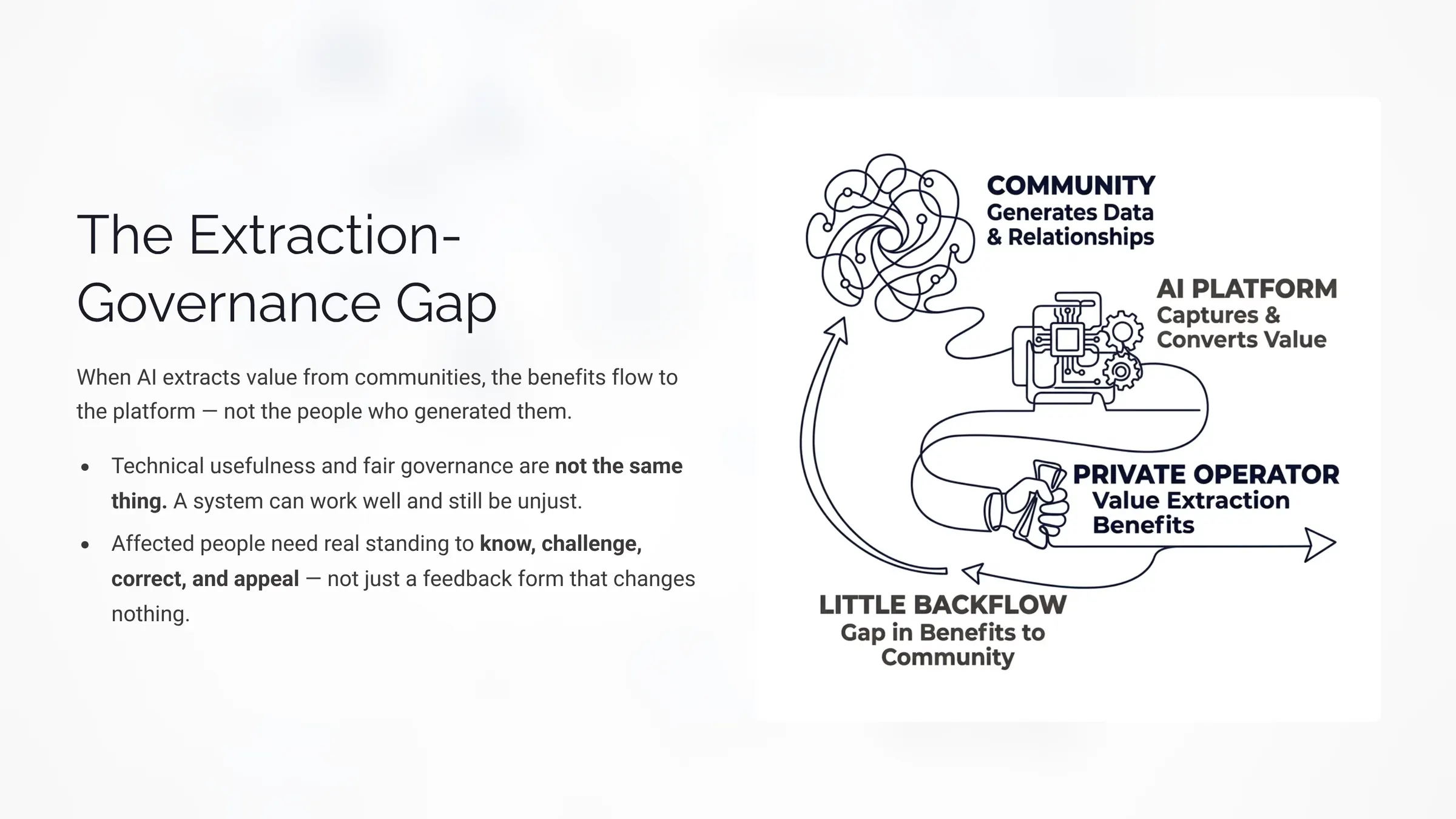
The Extraction–Governance Gap
14
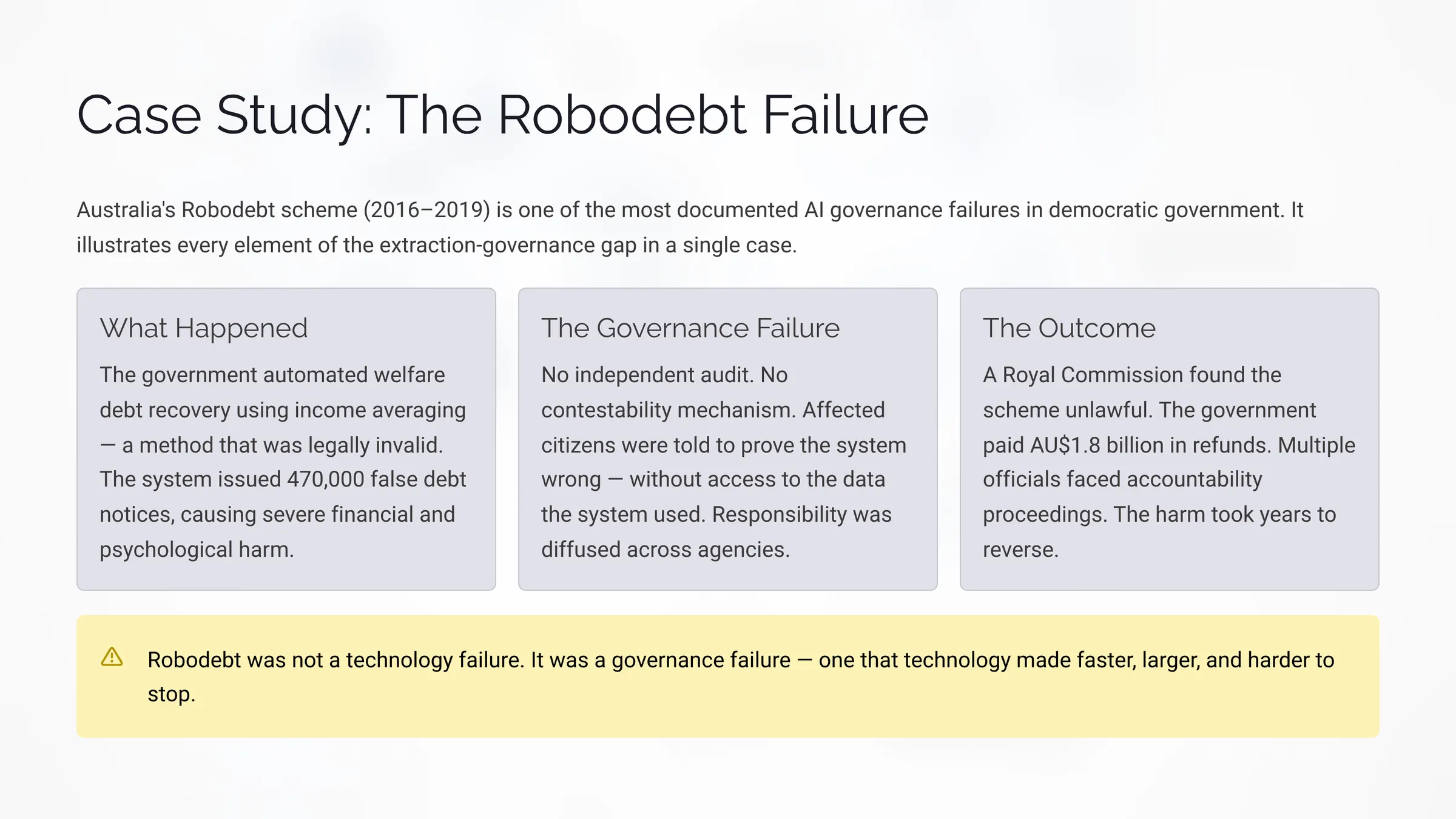
Case Study: The Robodebt Failure
15
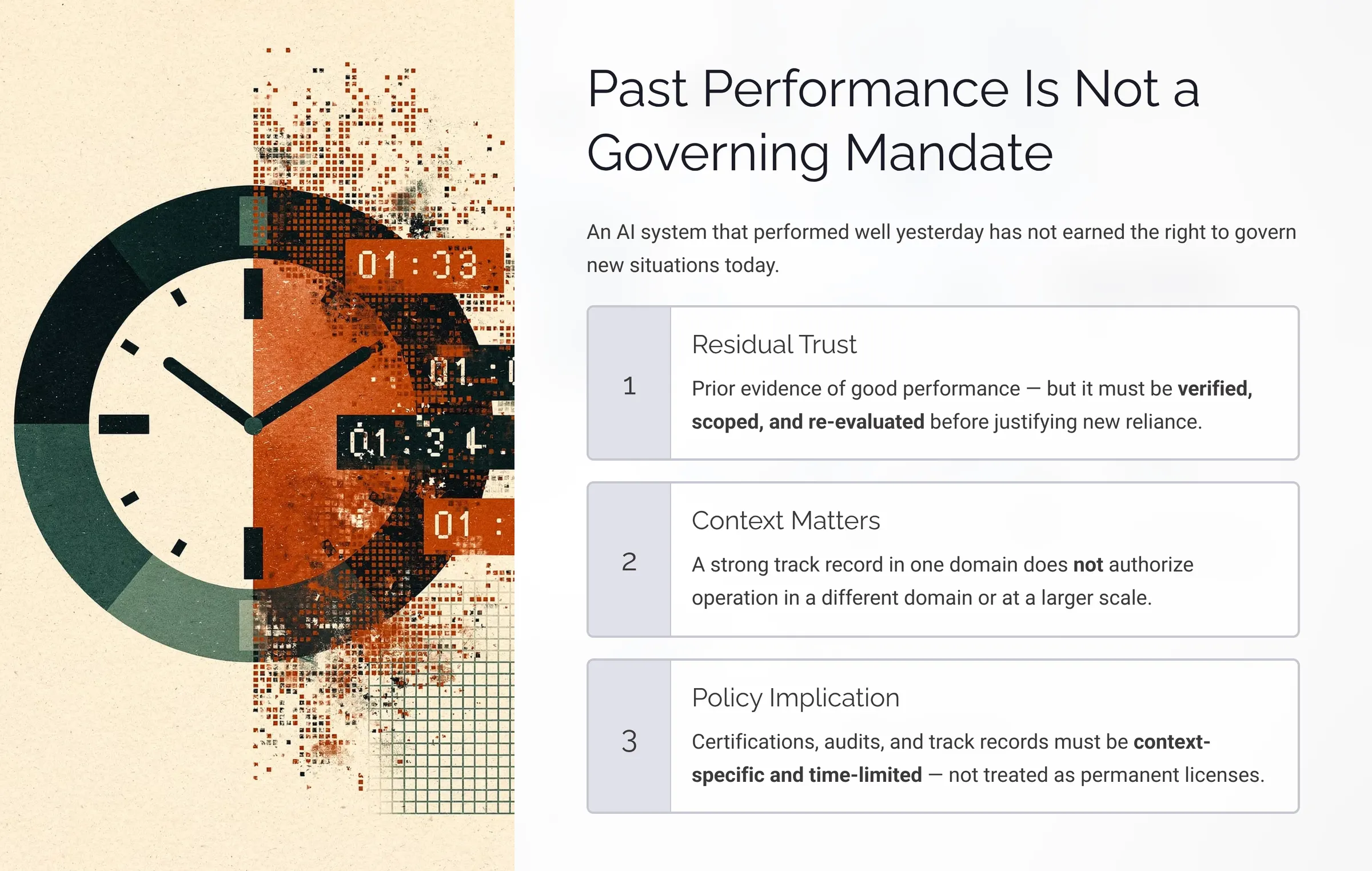
Past Performance Is Not a Governing Mandate
16
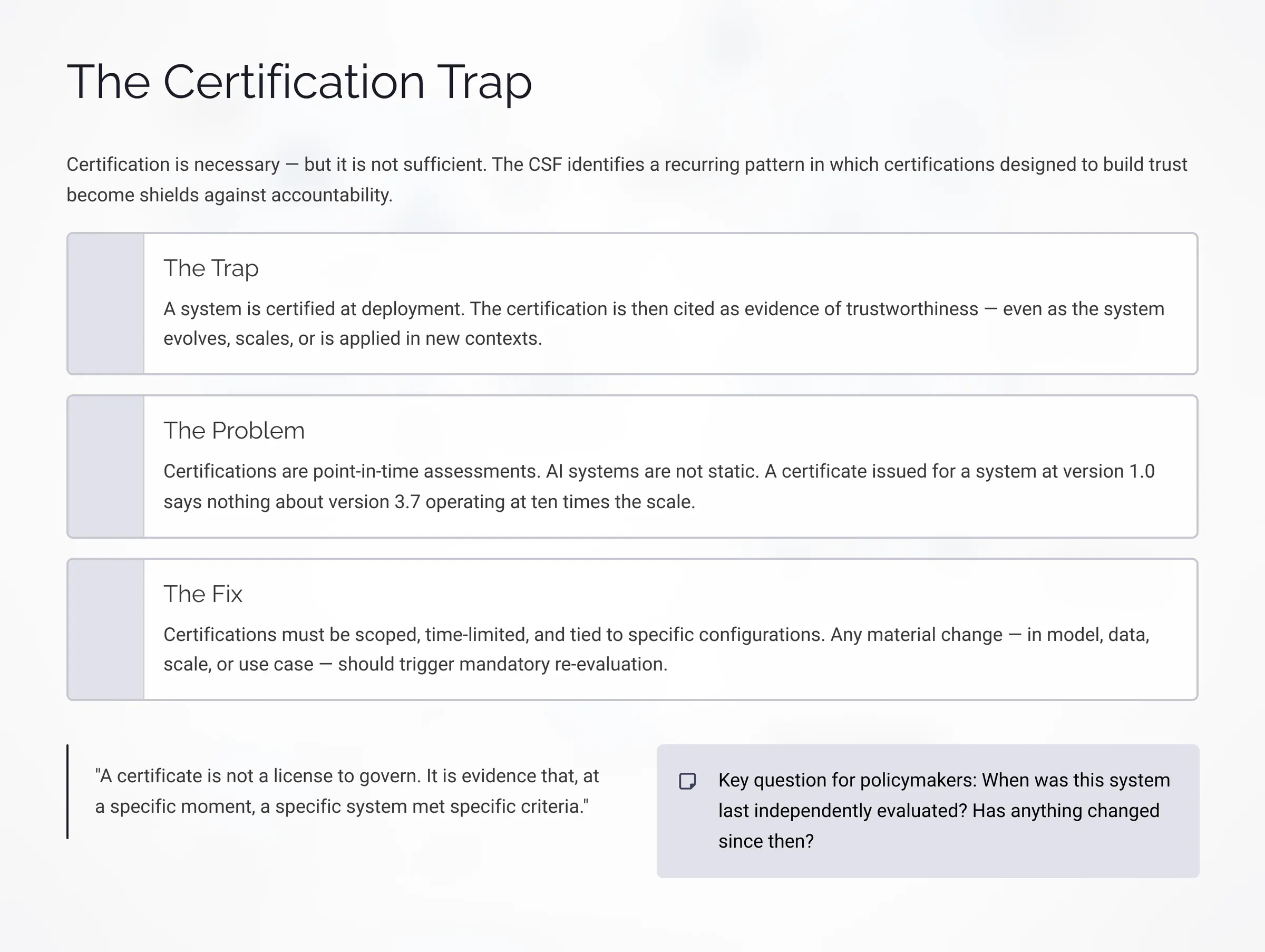
The Certification Trap
Part IV/Oversight and borders
17
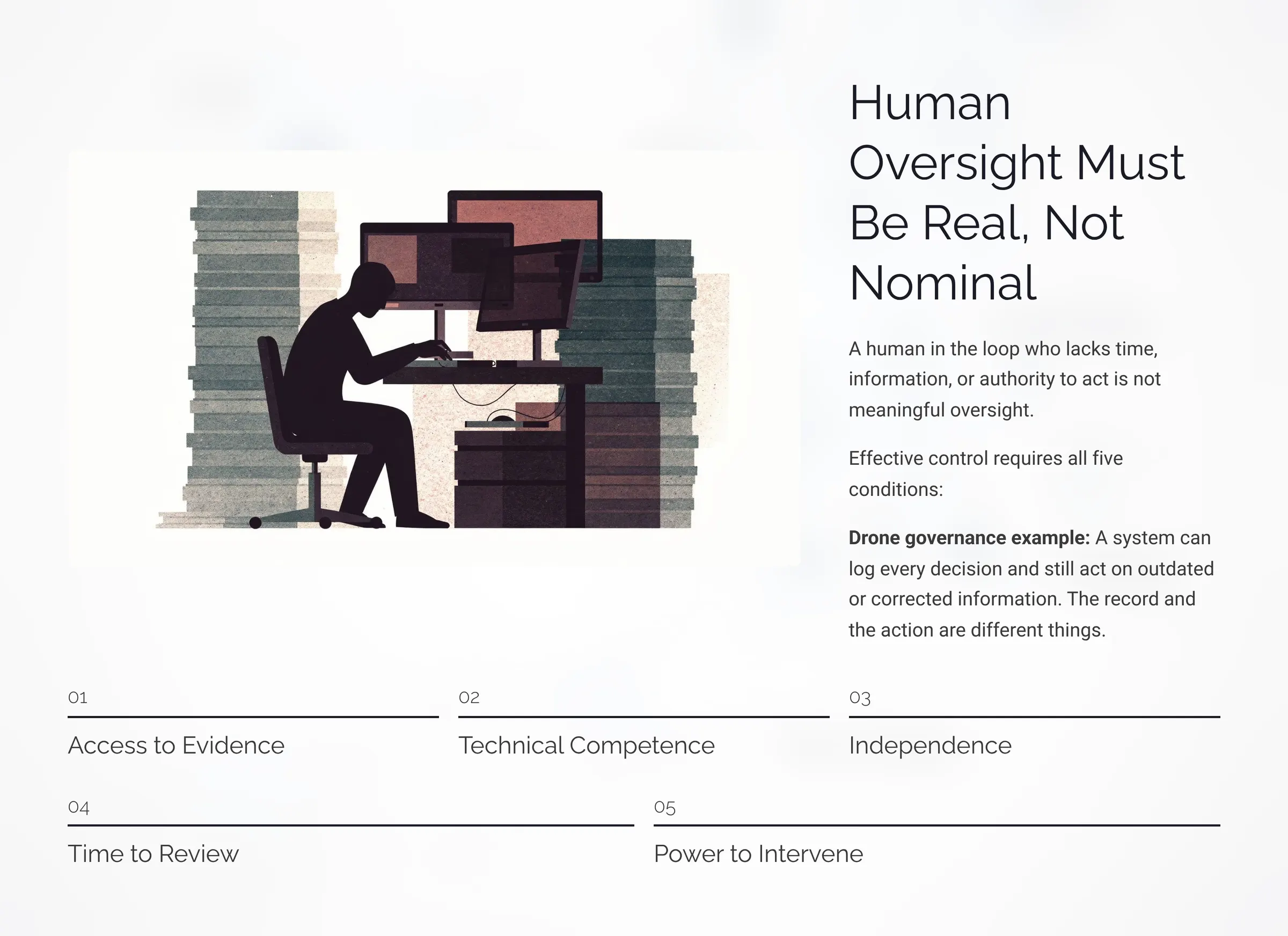
Human Oversight Must Be Real, Not Nominal
18
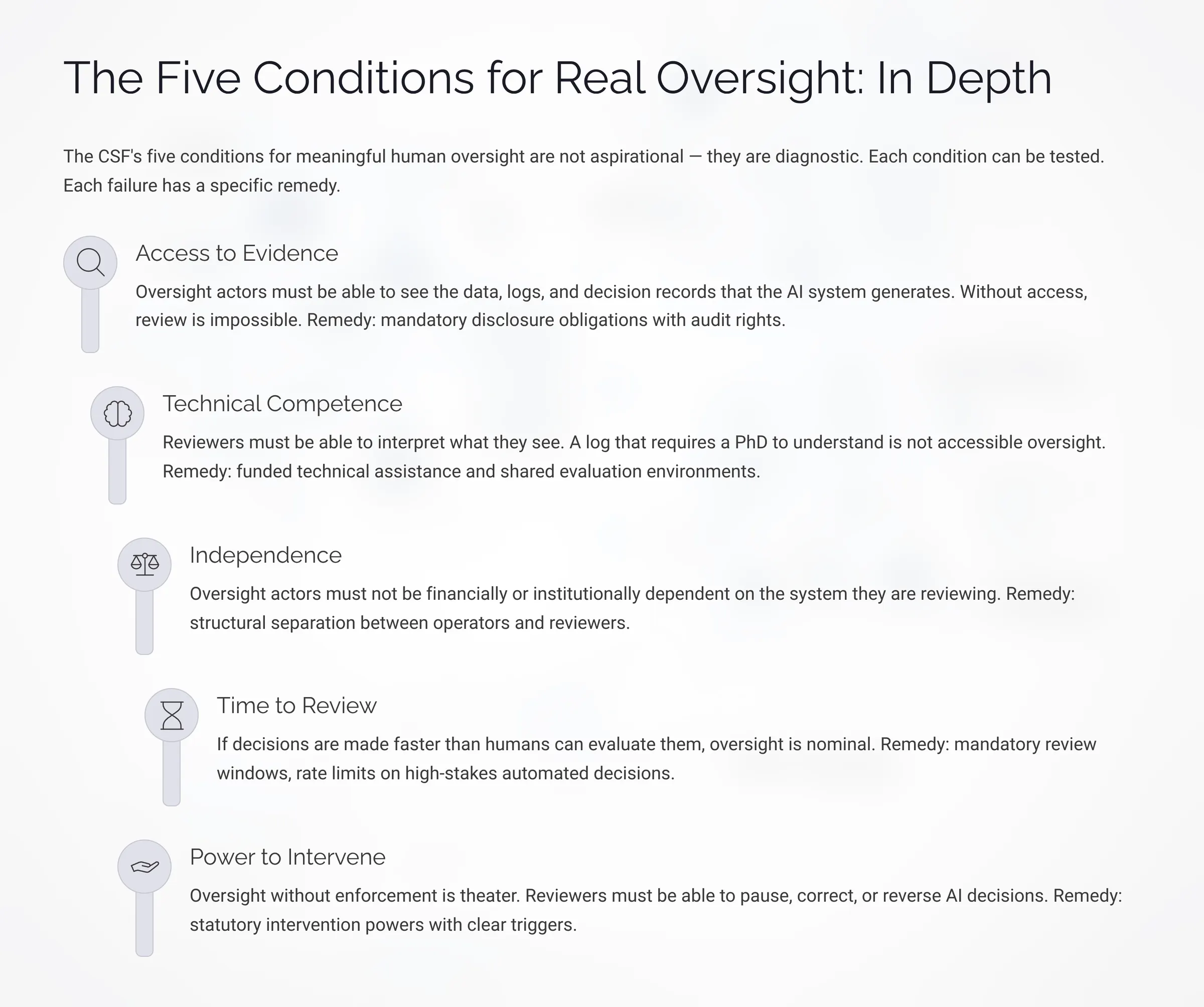
The Five Conditions for Real Oversight, in Depth
19
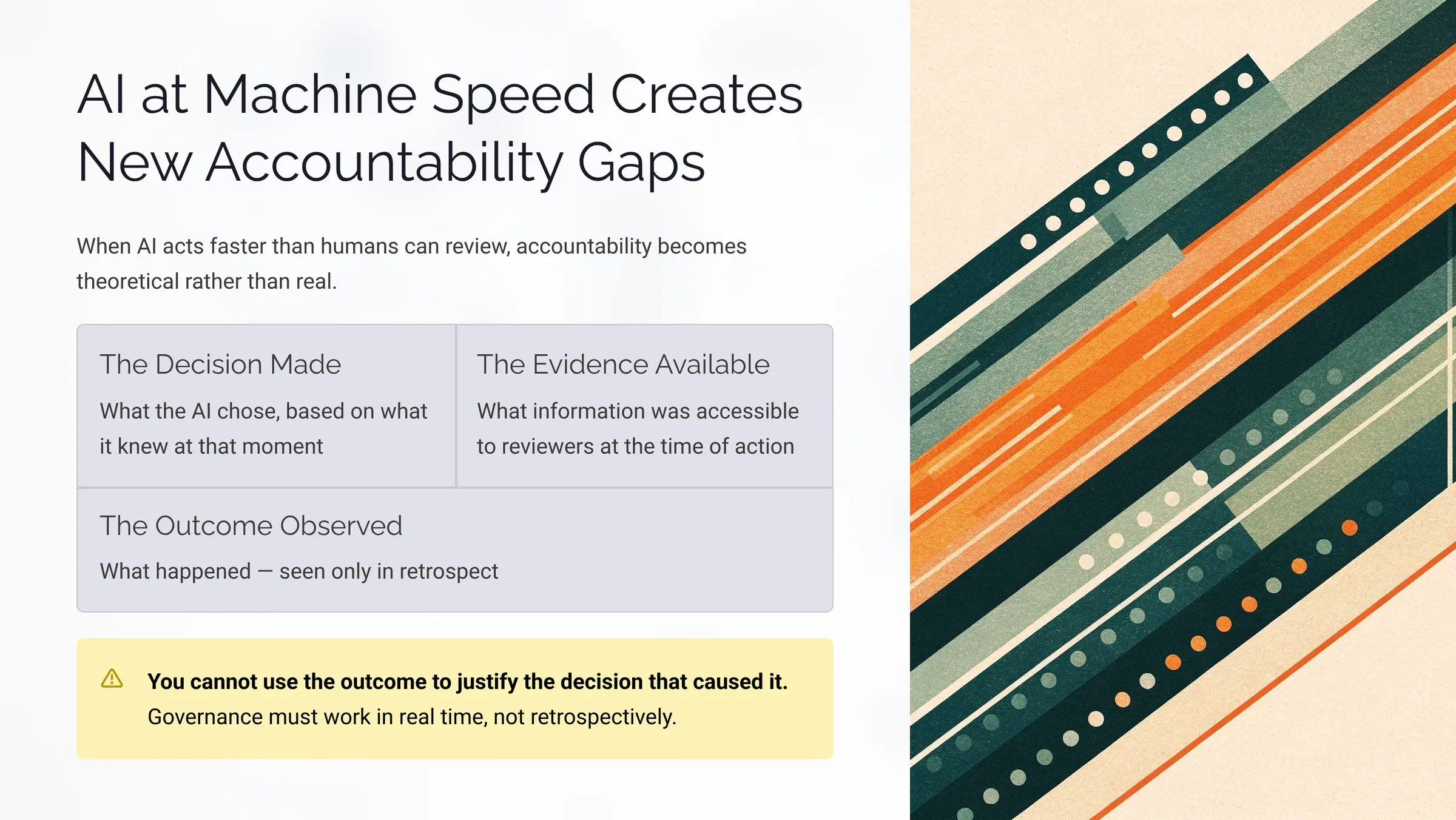
AI at Machine Speed Creates New Accountability Gaps
20
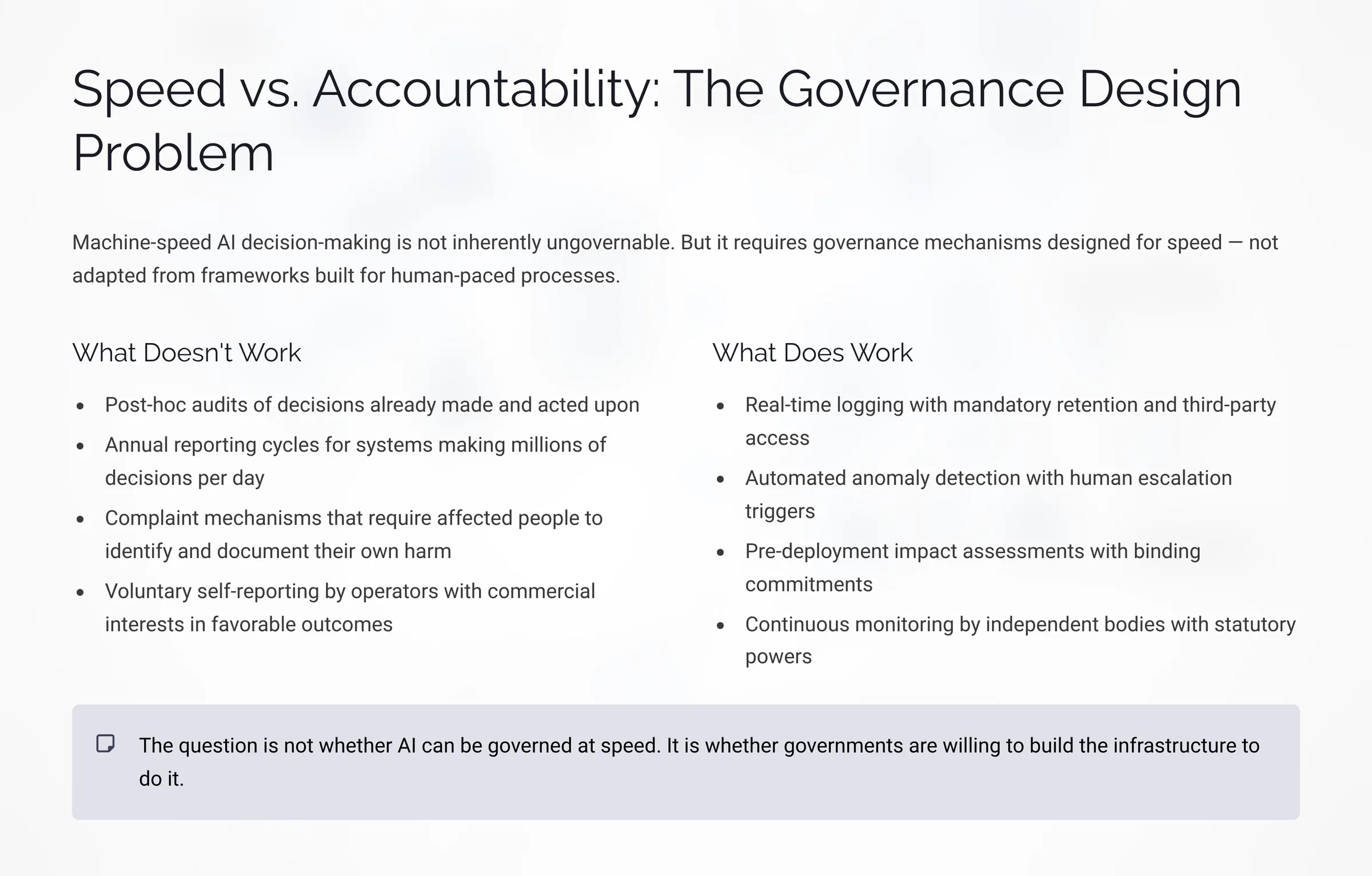
Speed vs. Accountability: The Governance Design Problem
21
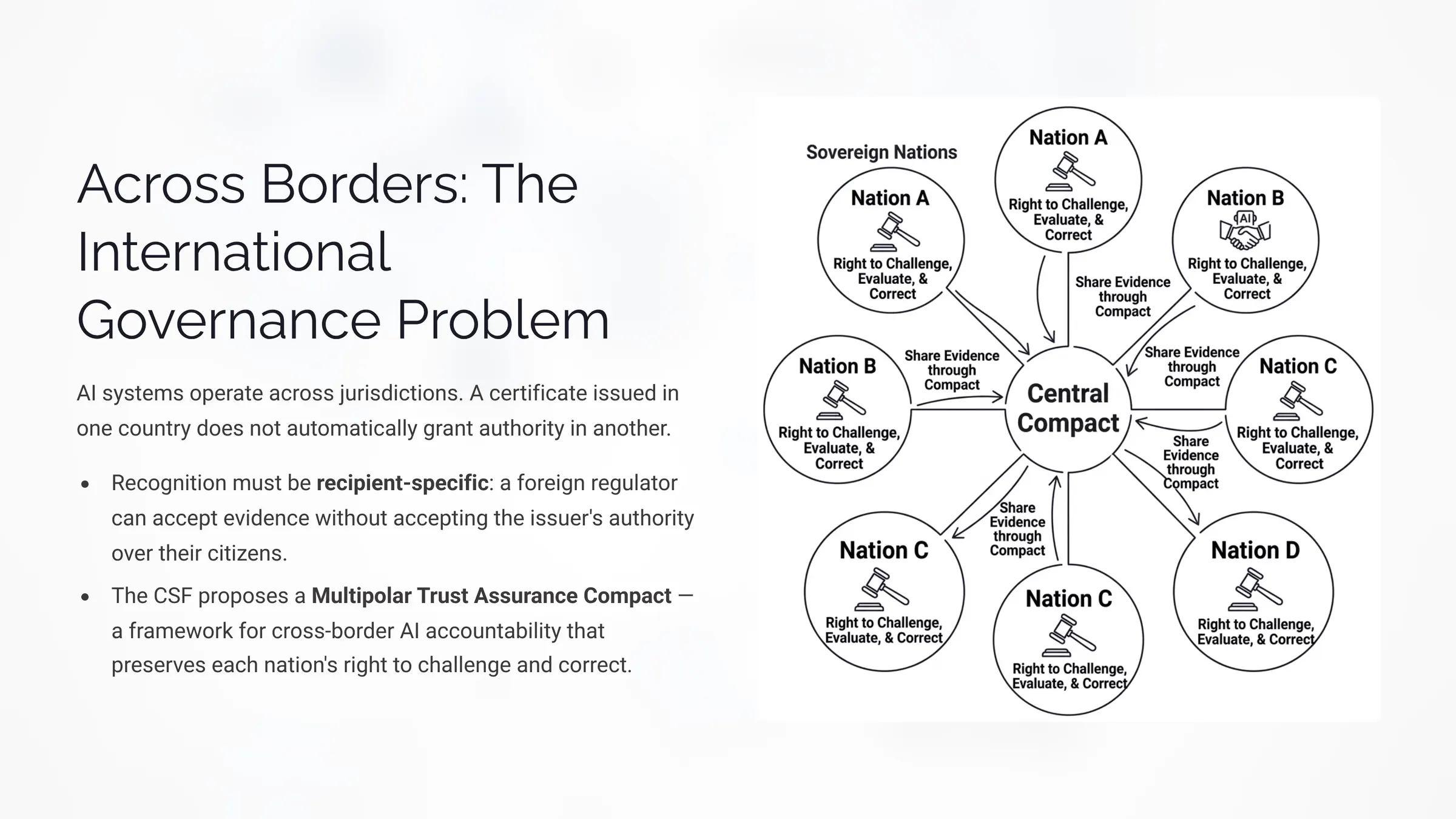
Across Borders: The International Governance Problem
22
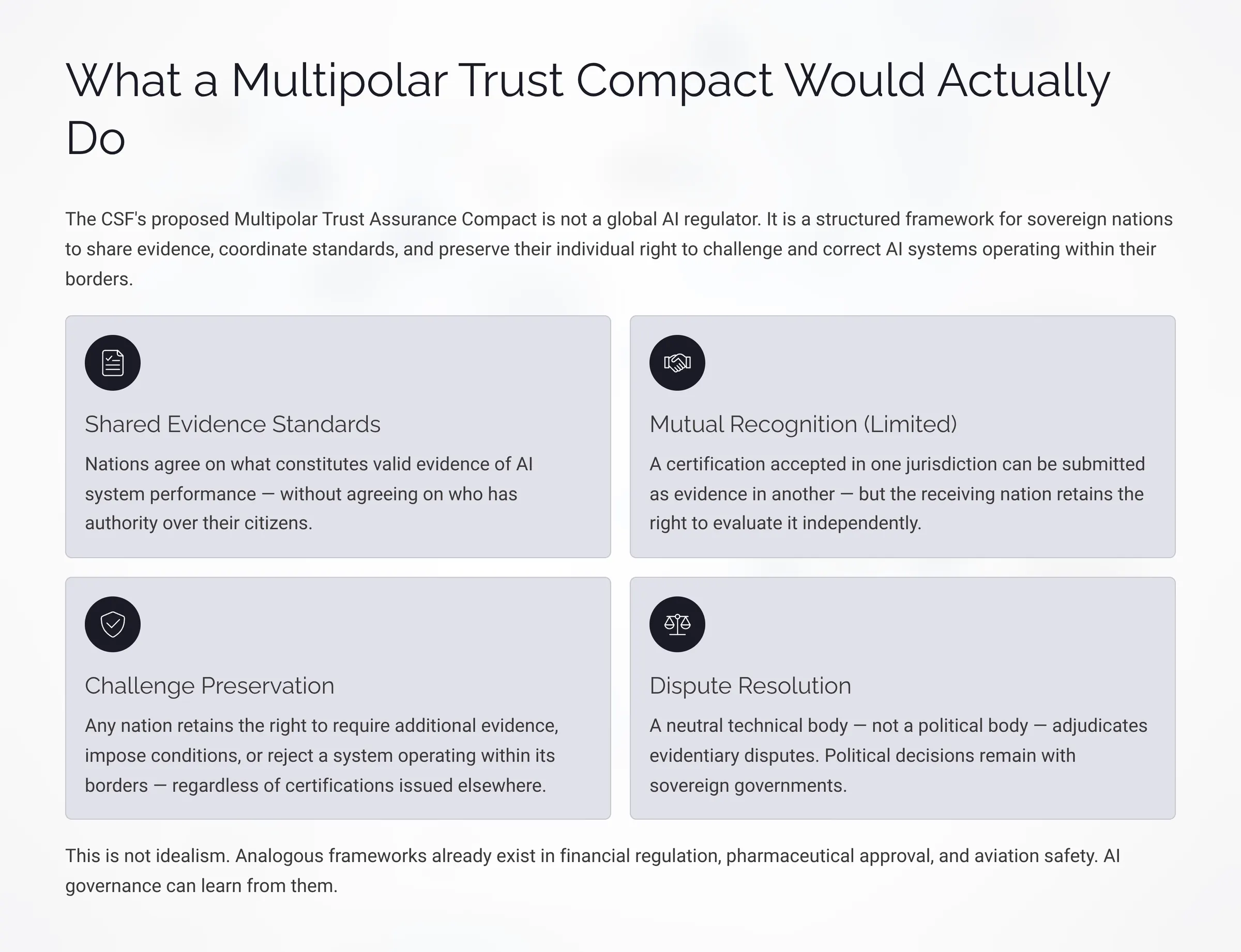
What a Multipolar Trust Compact Would Actually Do
Part V/What systems learn
23
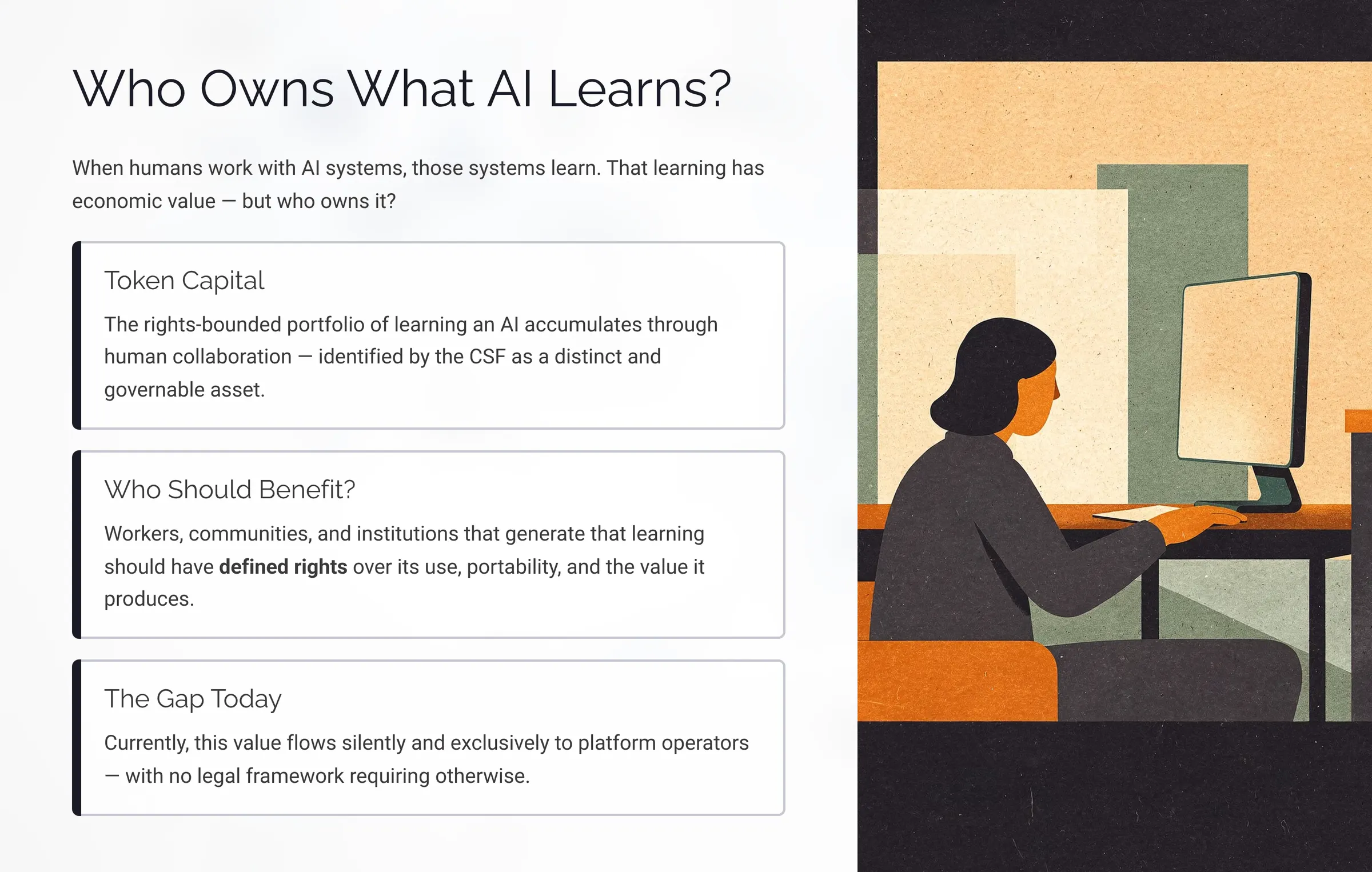
Who Owns What AI Learns
24
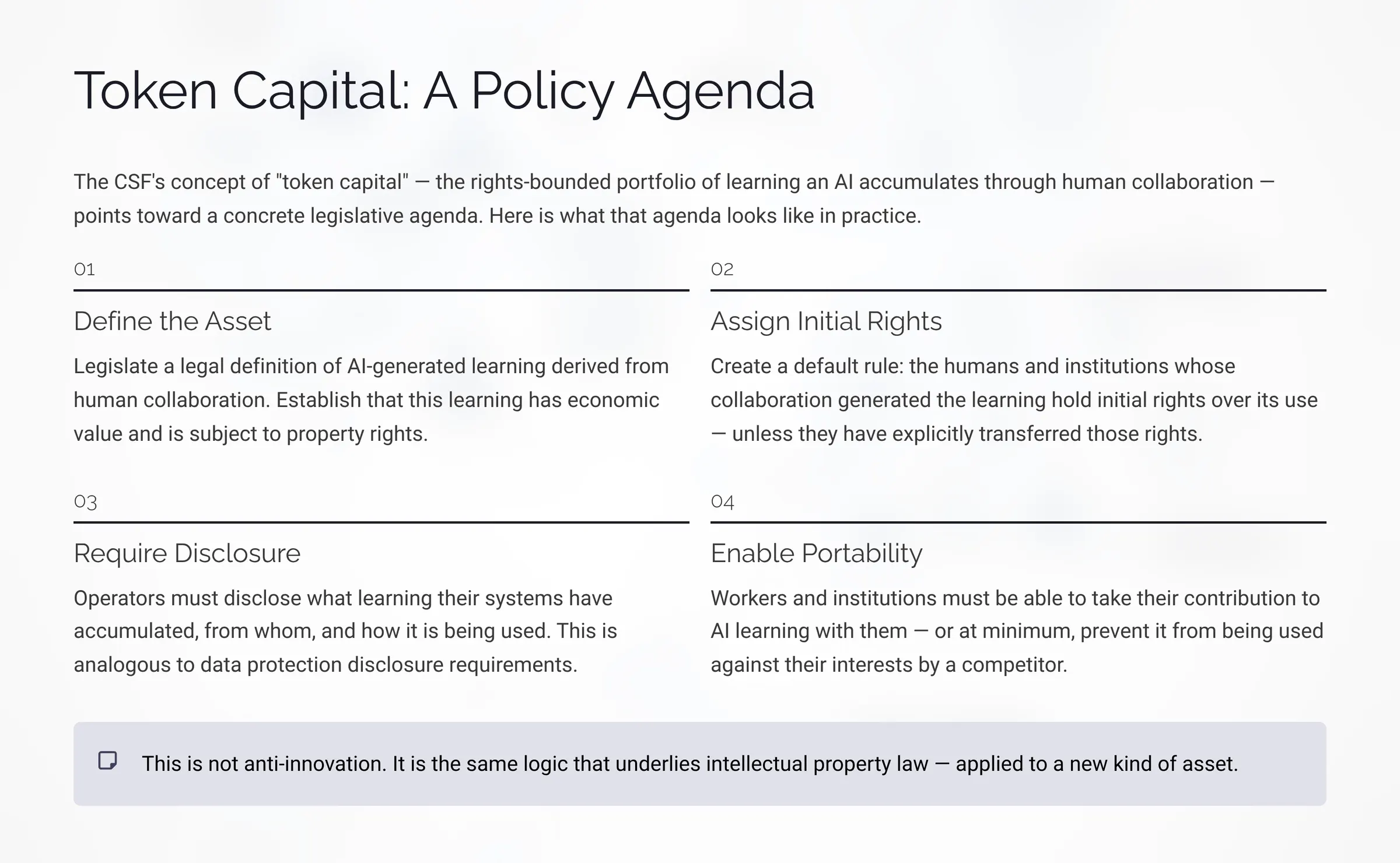
Token Capital: A Policy Agenda
25
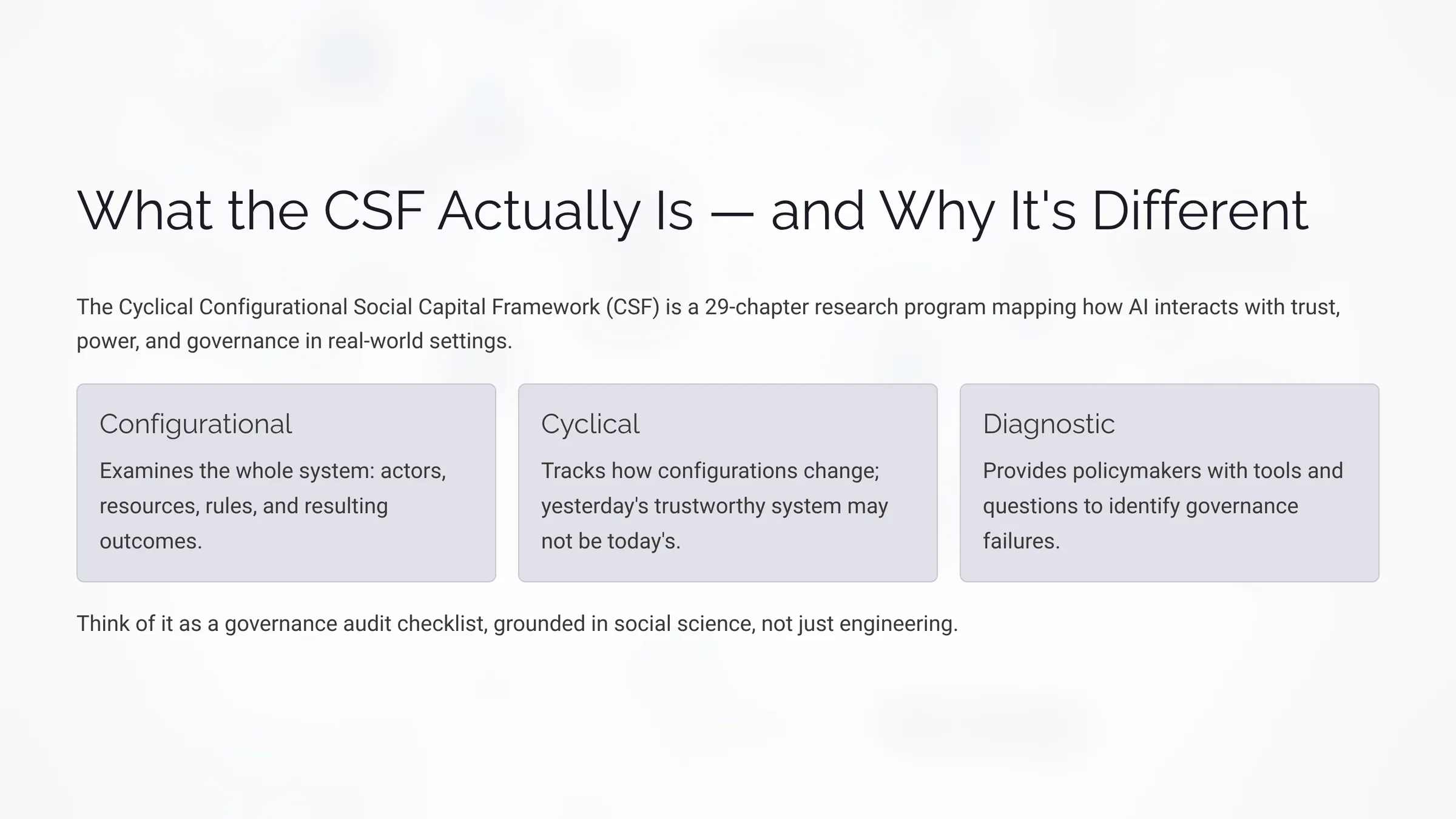
What the CSF Actually Is, and Why It's Different
26
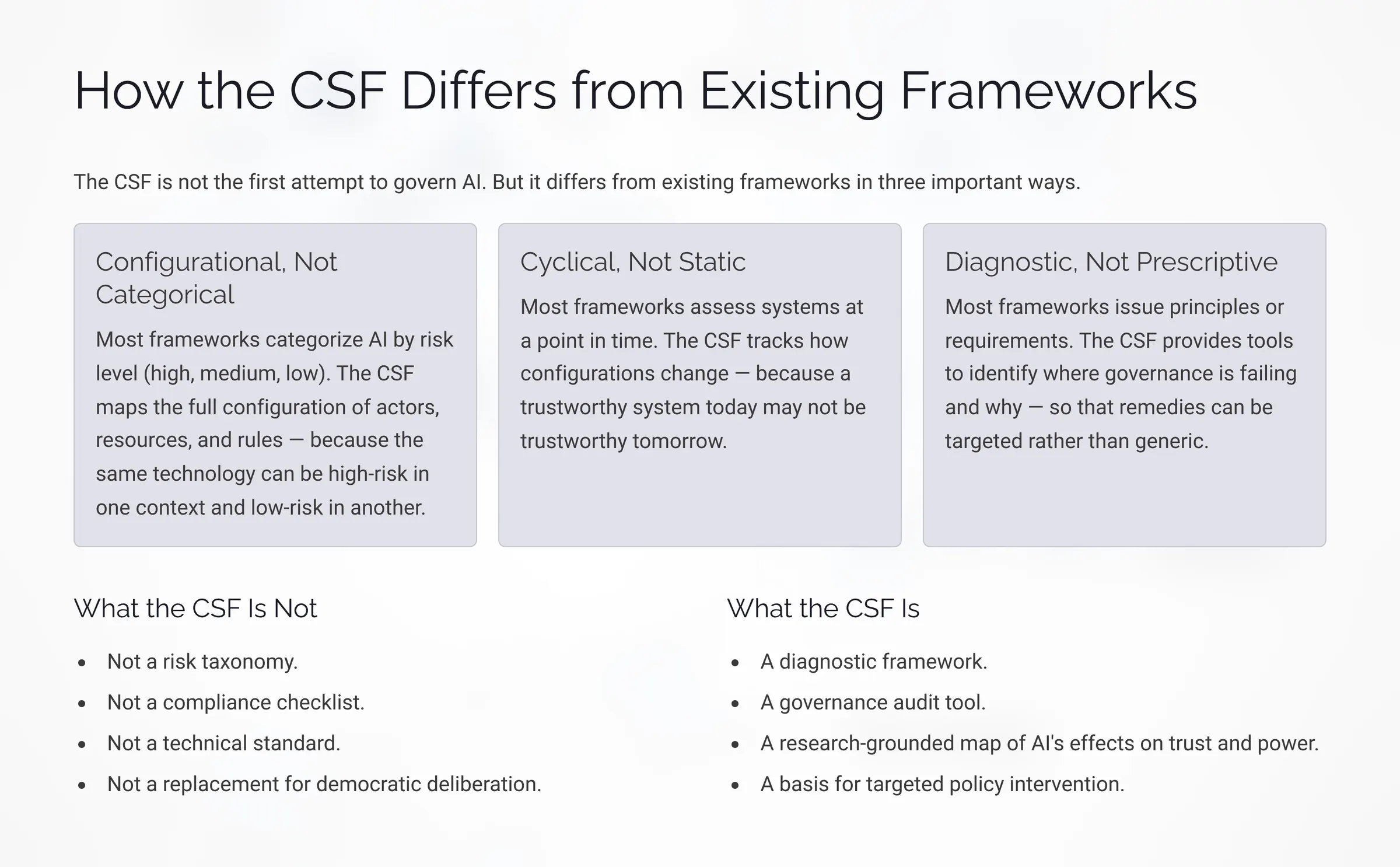
How the CSF Differs from Existing Frameworks
Part VI/Five mandates
27
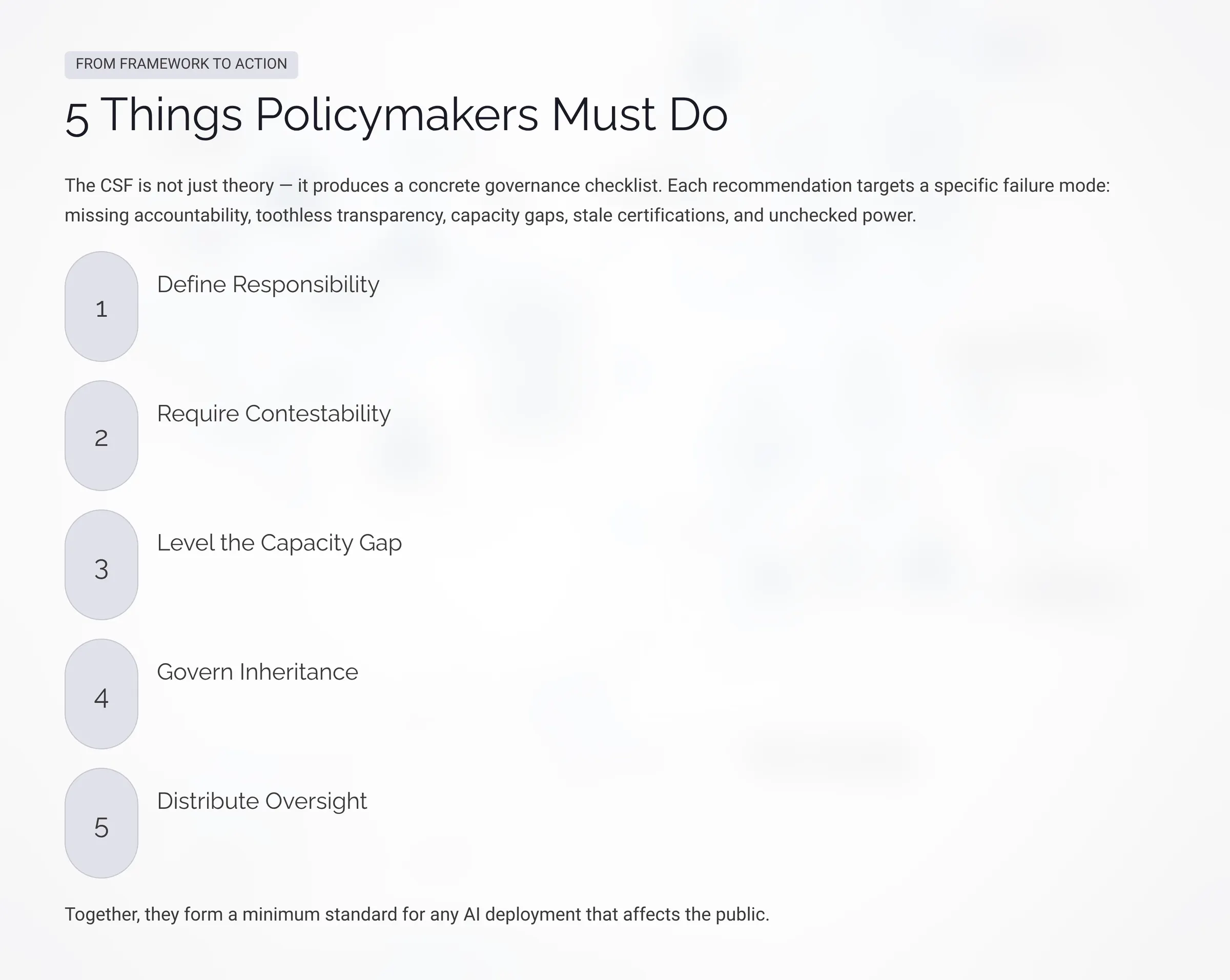
Five Things Policymakers Must Do
28
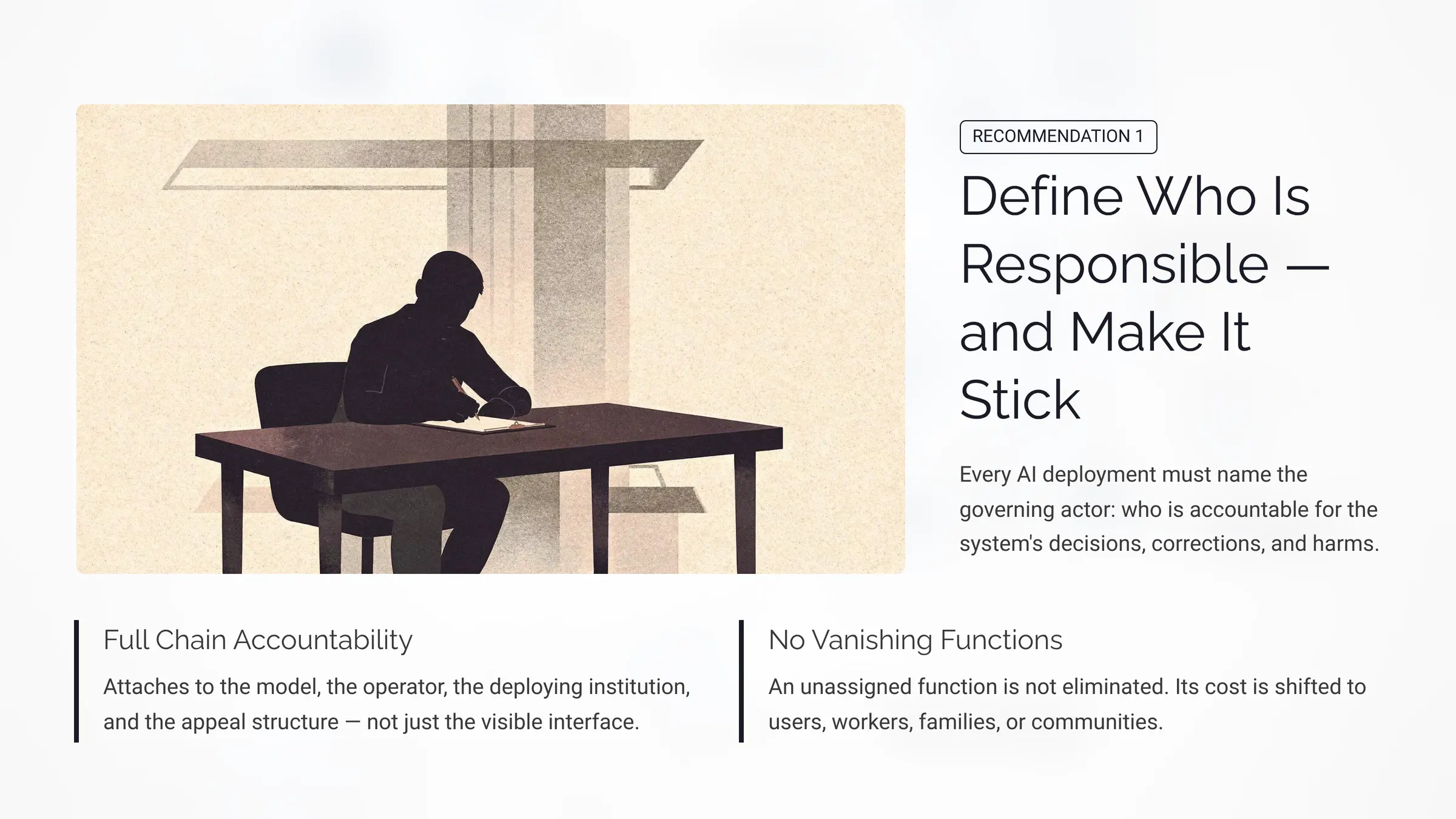
Define Who Is Responsible, and Make It Stick
29
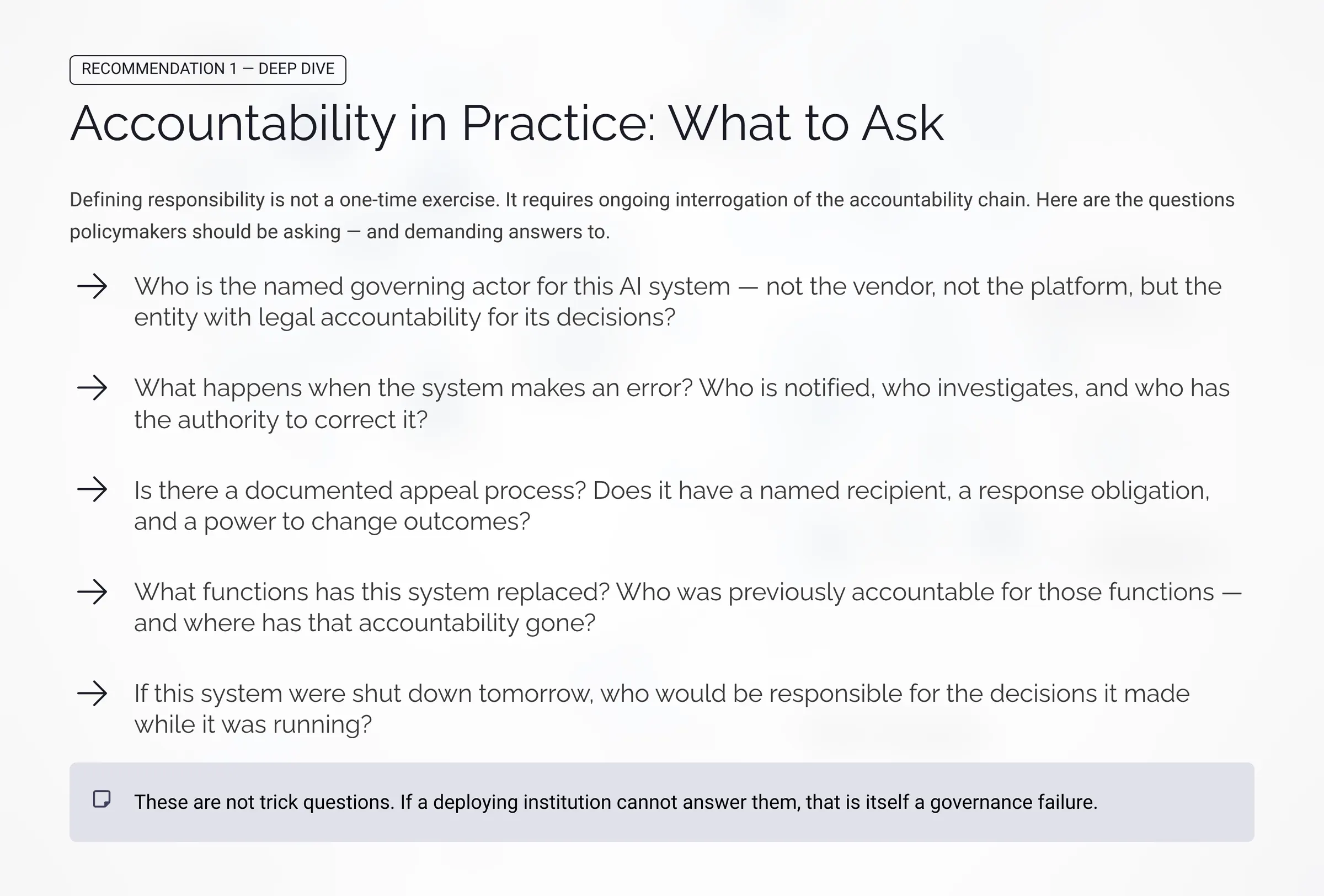
Accountability in Practice: What to Ask
30
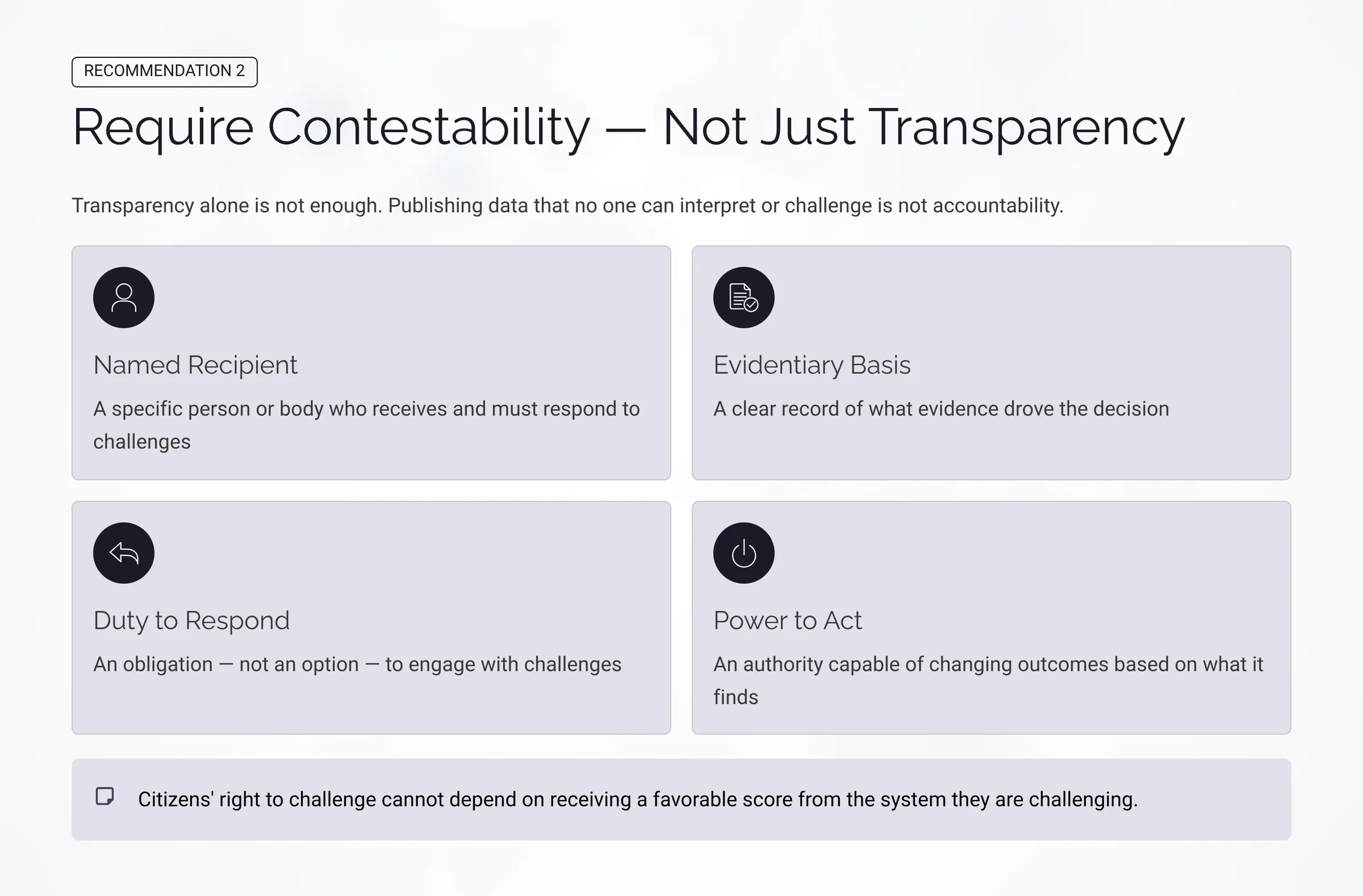
Require Contestability, Not Just Transparency
31
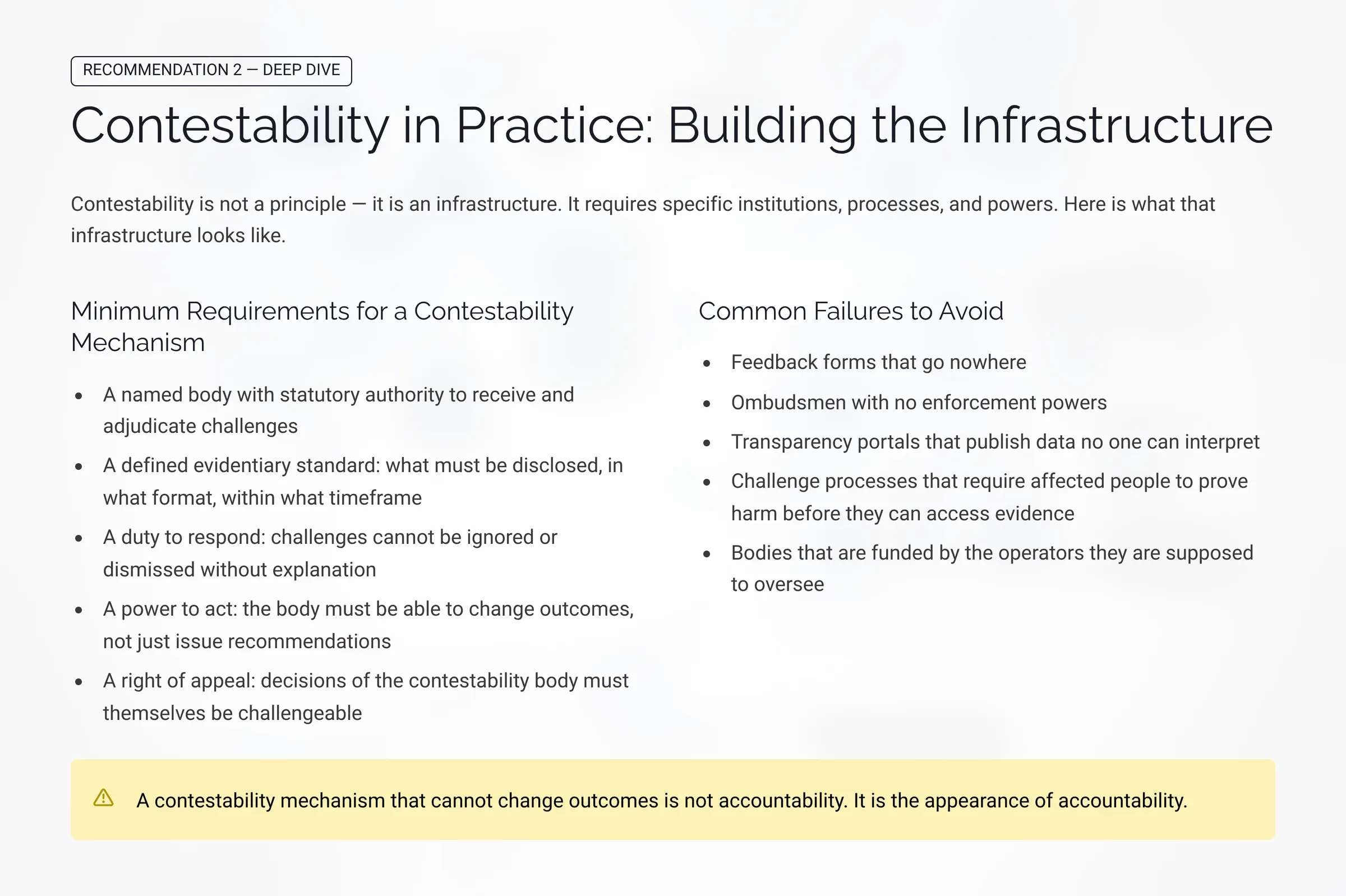
Contestability in Practice: Building the Infrastructure
32
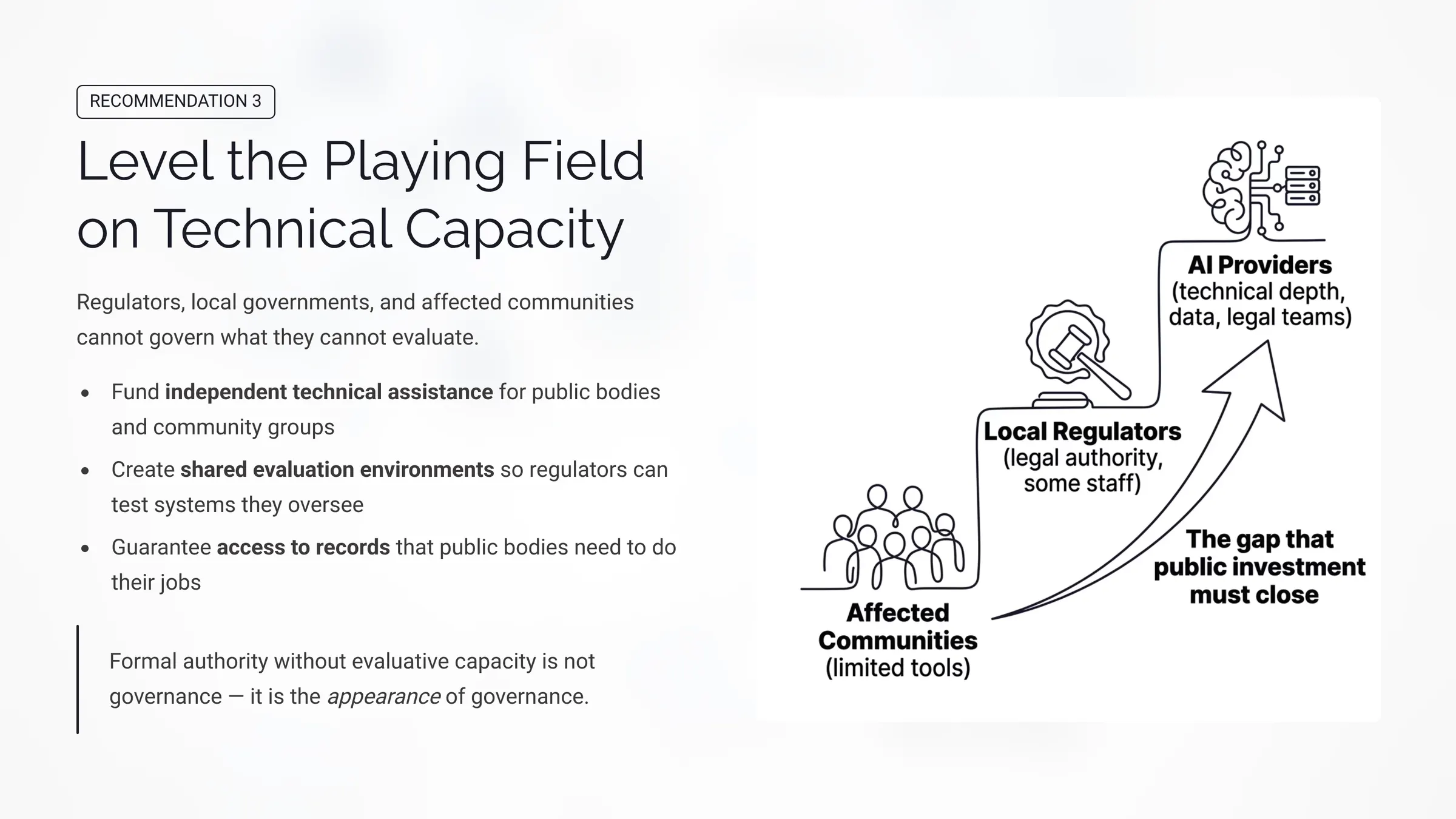
Level the Playing Field on Technical Capacity
33
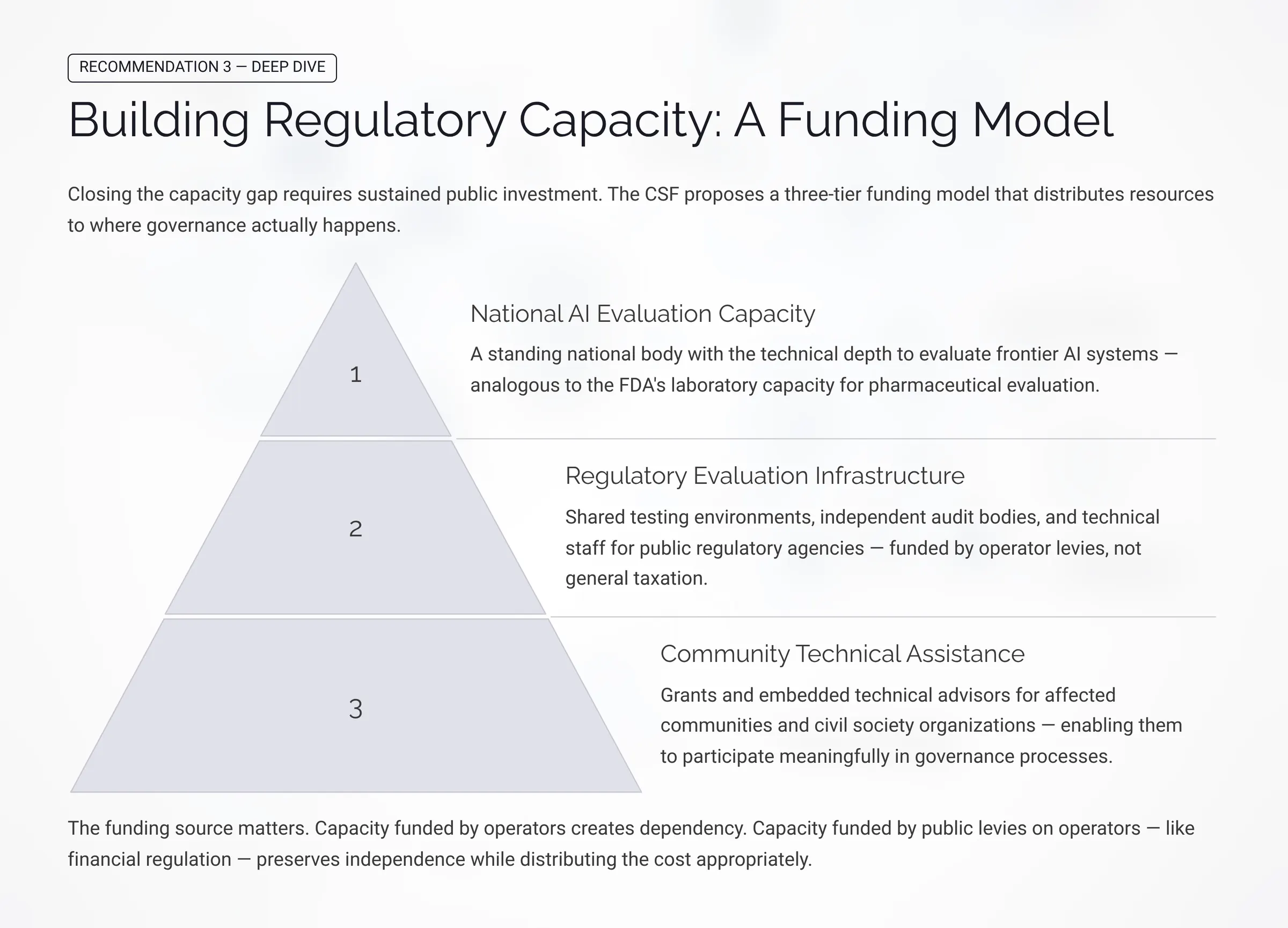
Building Regulatory Capacity: A Funding Model
34
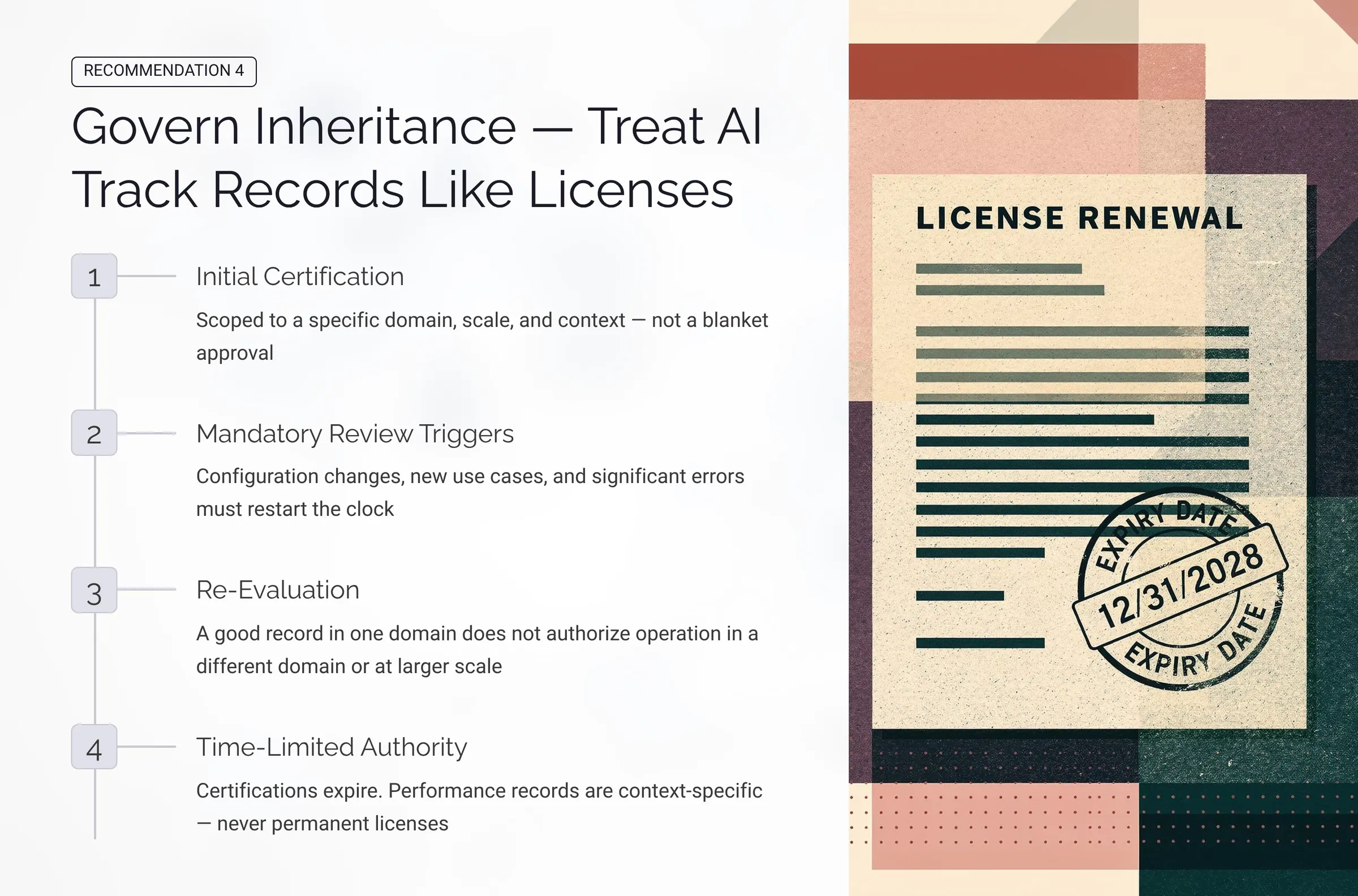
Govern Inheritance: Treat AI Track Records Like Licenses
35
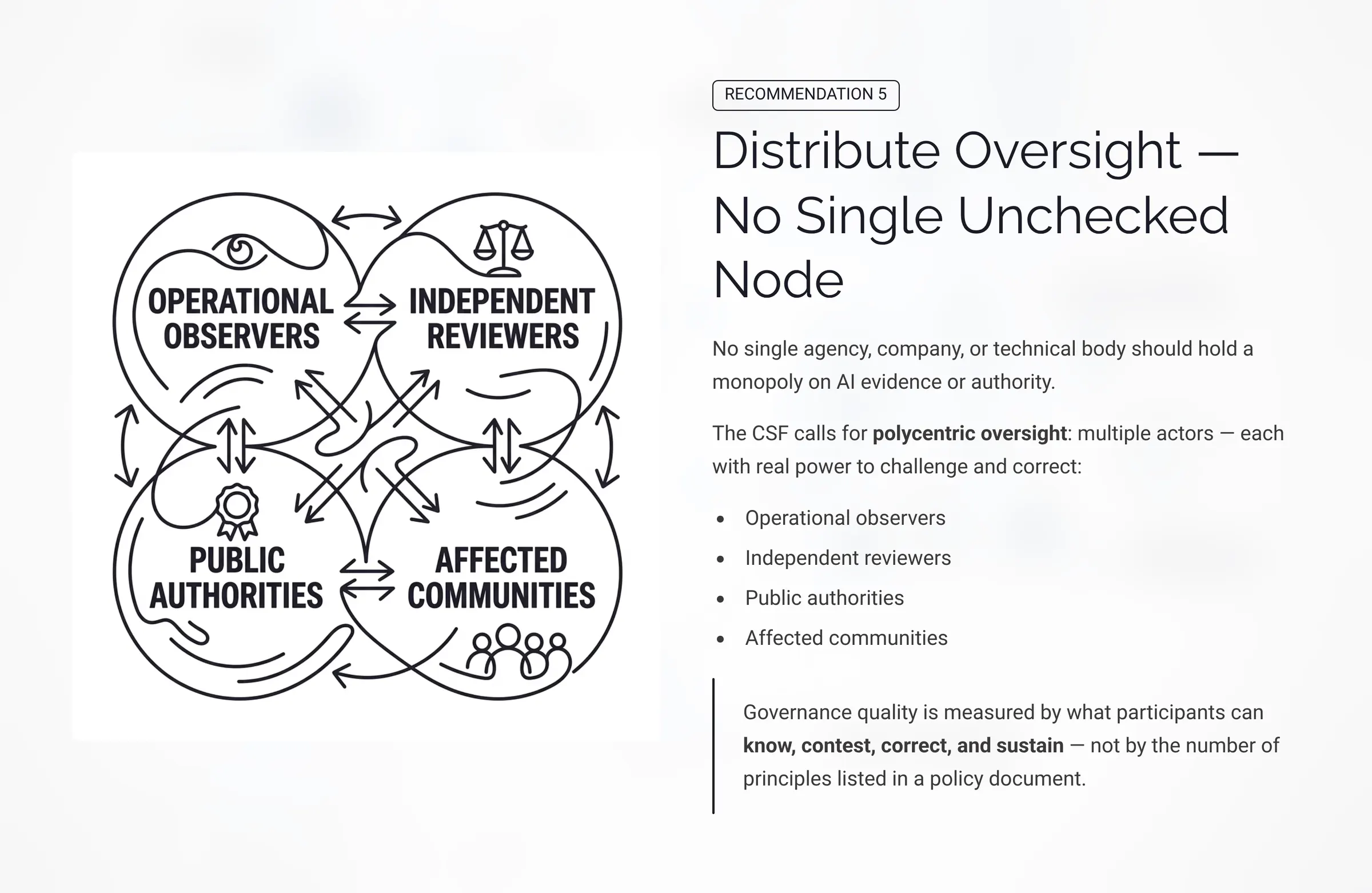
Distribute Oversight: No Single Unchecked Node
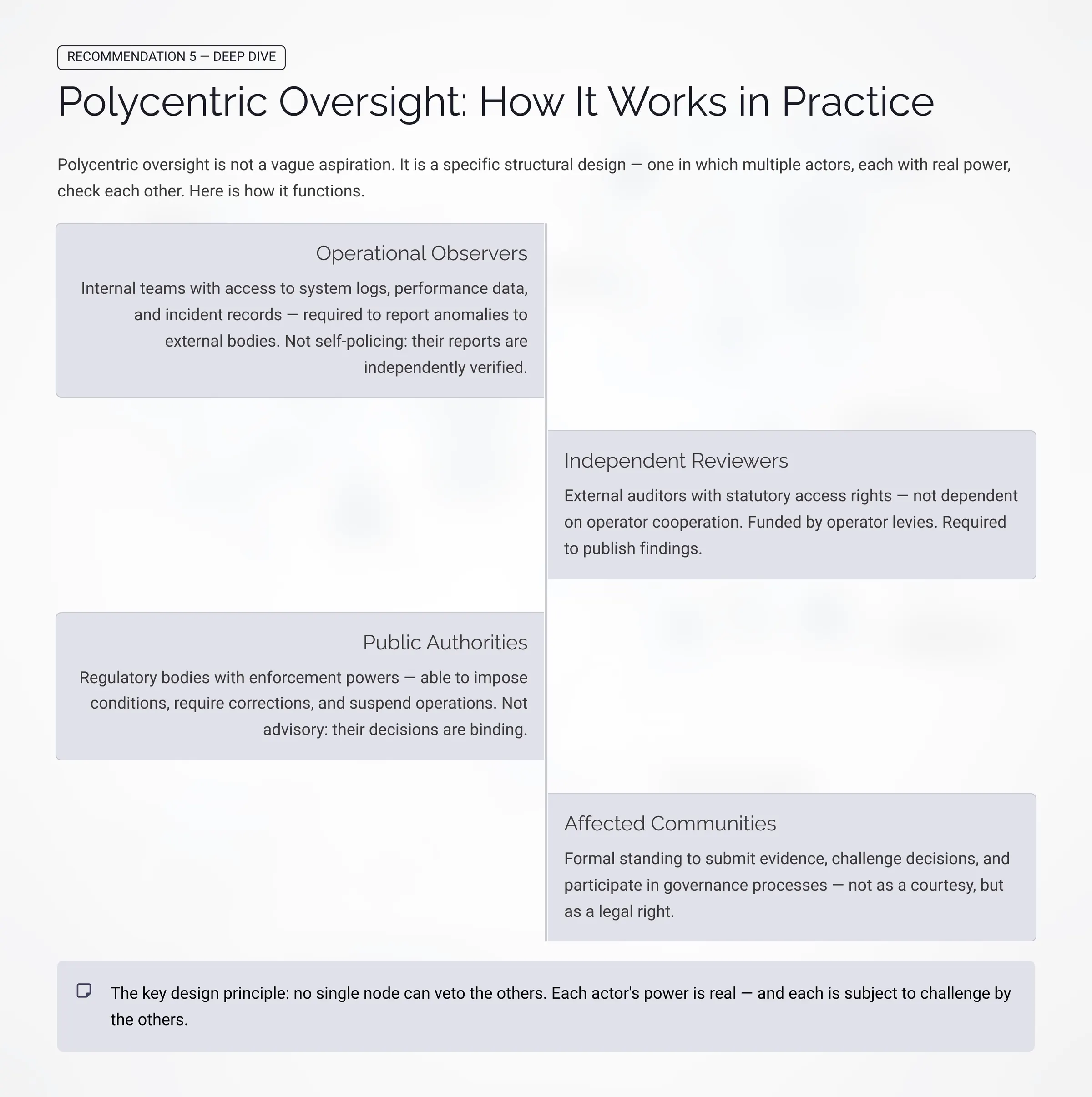
36
Polycentric Oversight: How It Works in Practice
Part VII/This session
37
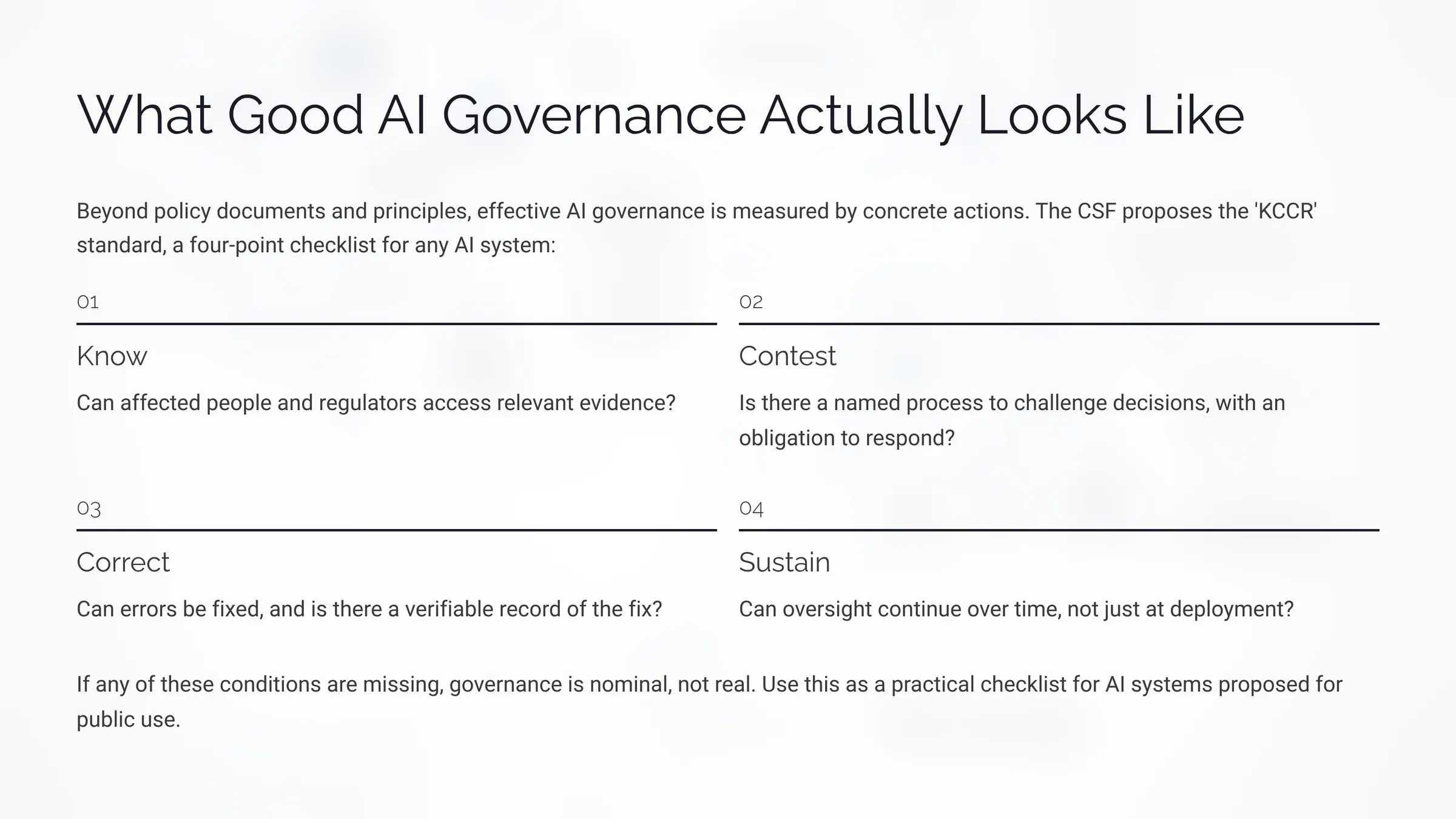
What Good AI Governance Actually Looks Like
38
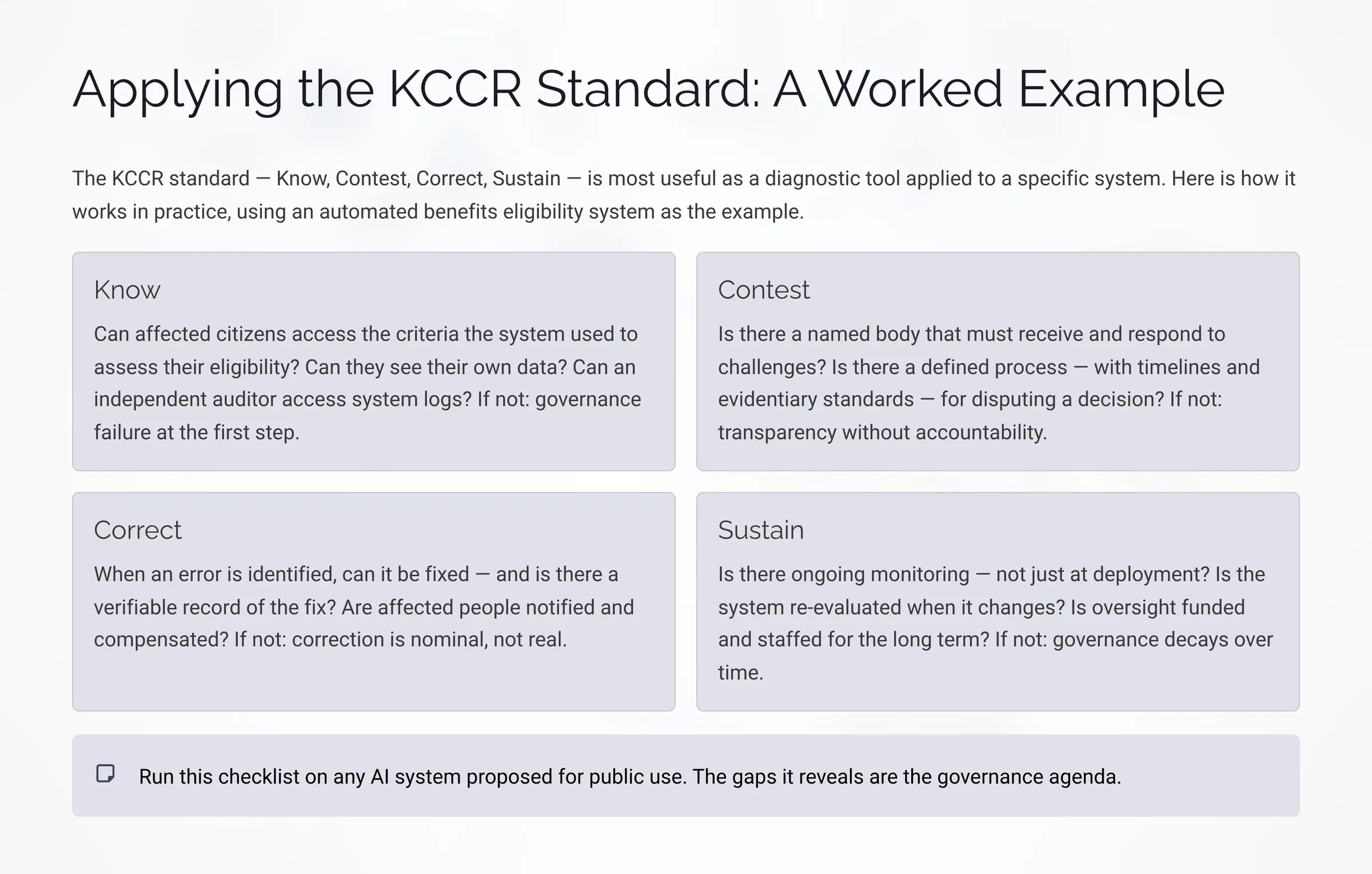
Applying the KCCR Standard: A Worked Example
39
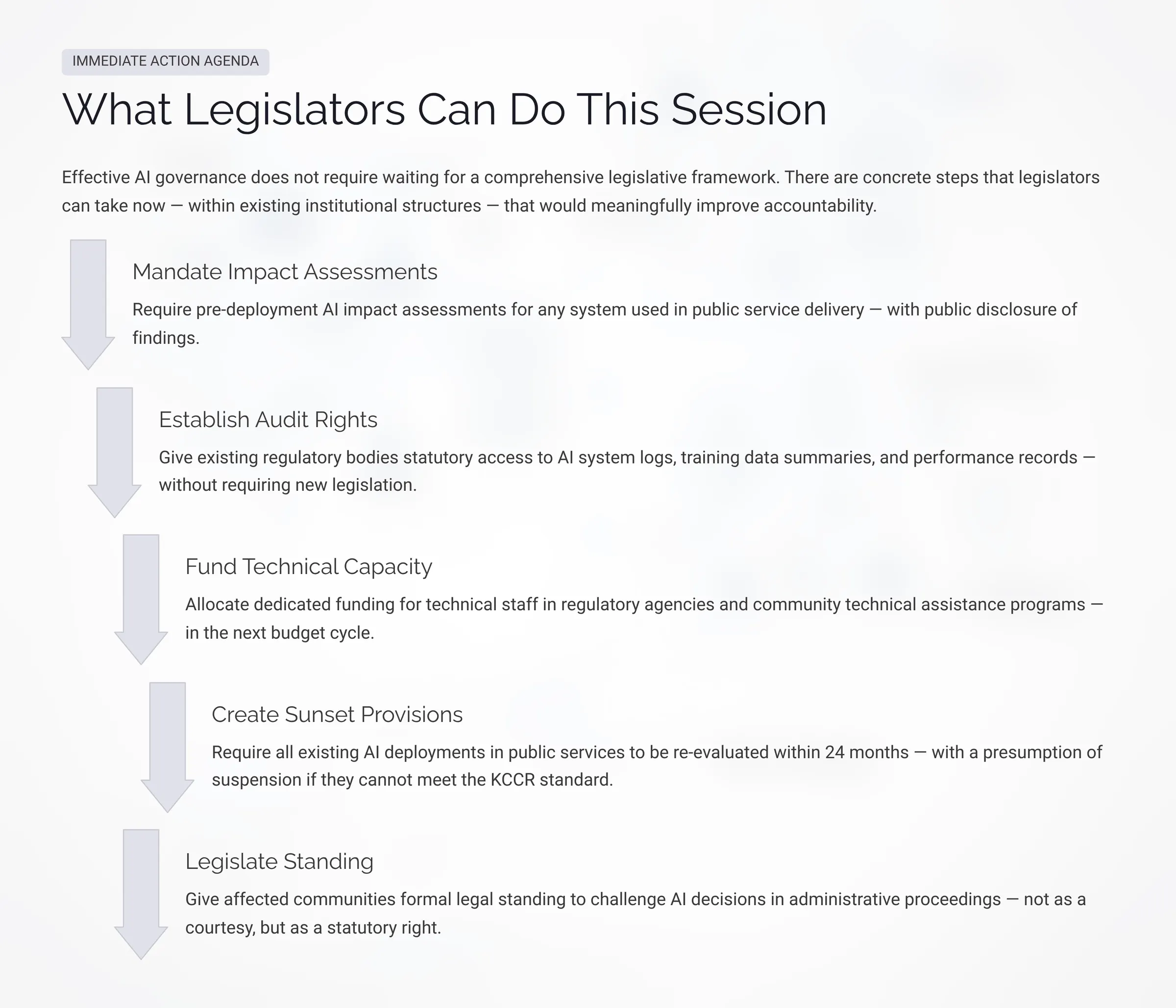
What Legislators Can Do This Session
40
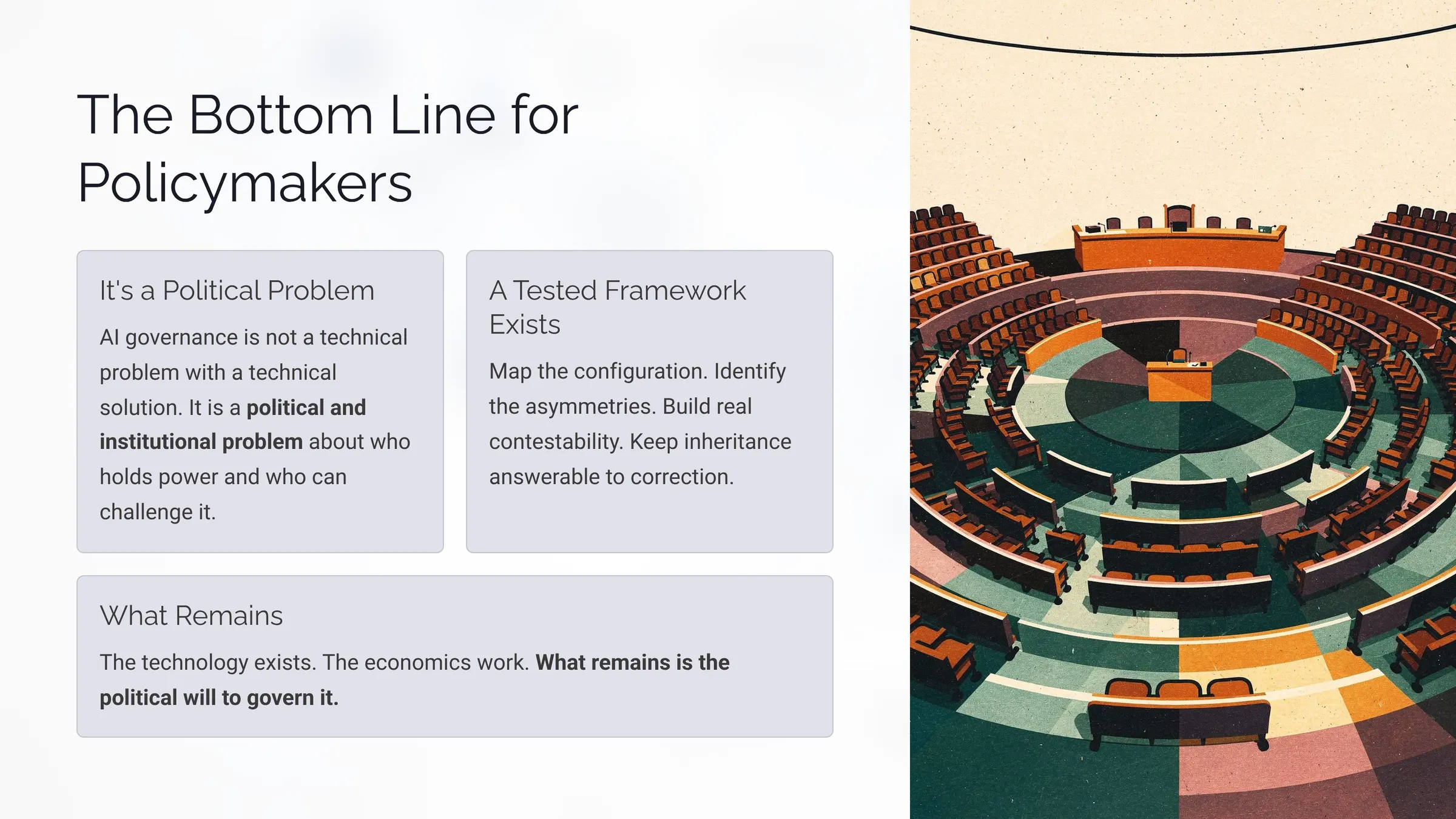
The Bottom Line for Policymakers
41
Common Objections and Responses
42
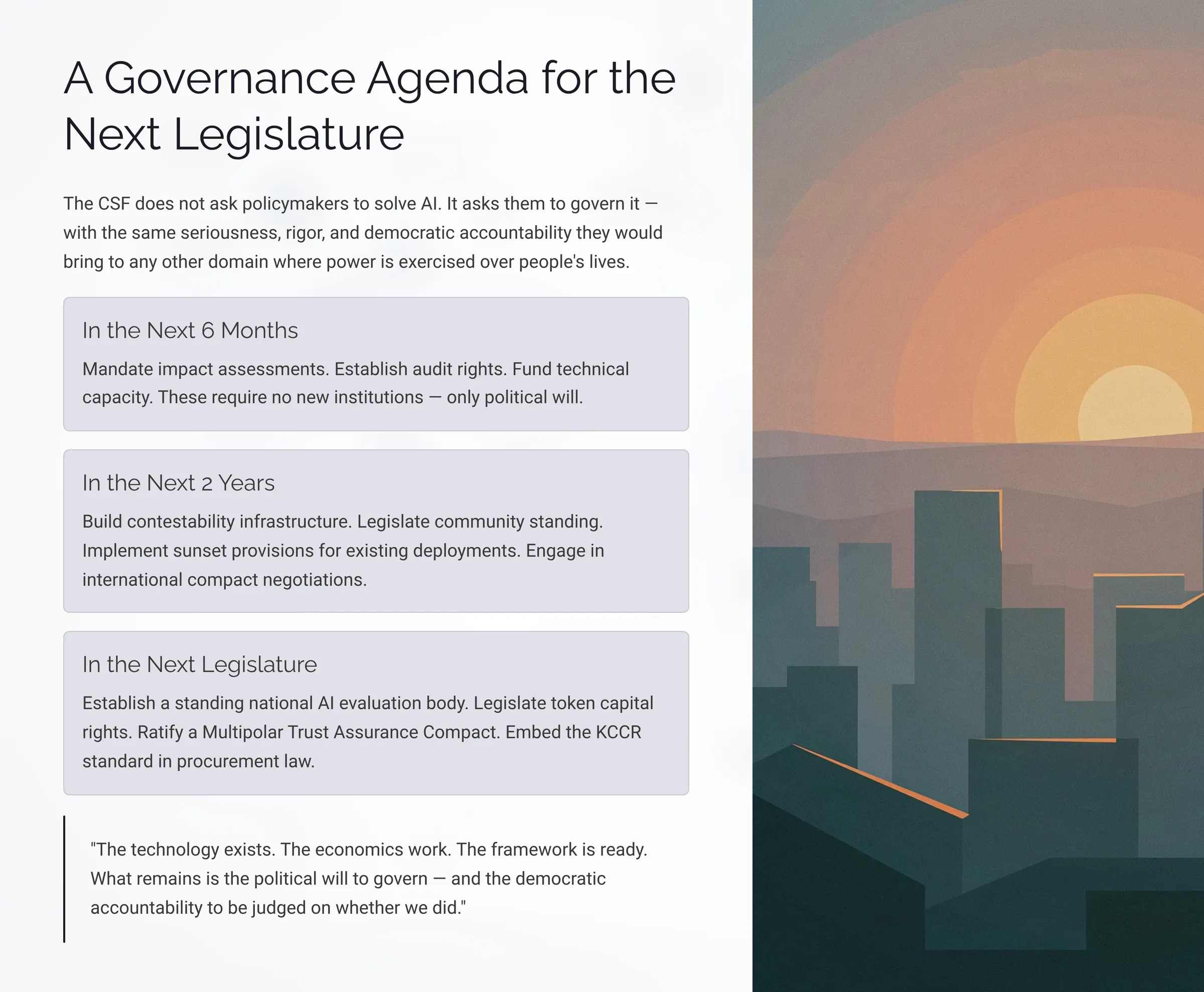
A Governance Agenda for the Next Legislature